1. Workpiece and Heat Treatment Applications
Different Well Furnace designs serve different workpiece and process requirements.
| Furnace Type |
Suitable Workpieces or Materials |
Applicable Processes |
| Ordinary Well Furnace |
Shafts, rods, pipes, rolls, wire coils and large mechanical parts |
Annealing, quenching, tempering, normalizing and carburizing |
| Well-type Quenching Furnace |
Metal workpieces requiring vertical loading and subsequent quenching |
Heating before quenching |
| Well Normalizing Furnace |
Long shafts, large forgings and heavy mechanical components |
Normalizing and annealing |
| Well-type Aging Furnace |
Aluminum alloys, magnesium alloys and steel |
Artificial aging |
| Vacuum Well Furnace |
Workpieces requiring vacuum or protective-atmosphere heat treatment |
Heating and cooling under vacuum or protective atmosphere |
2. Furnace Structure and Loading Configuration
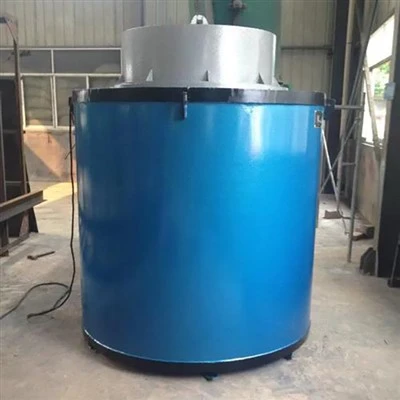
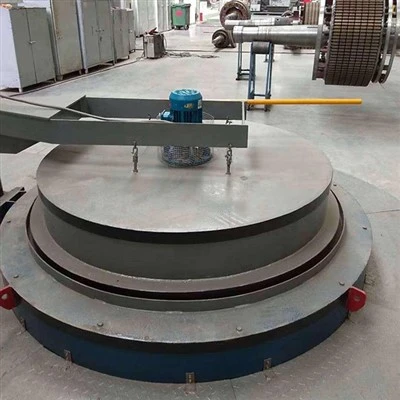
Well Furnaces use vertical loading. Workpieces can be suspended using lifting fixtures and lowered into the furnace by an overhead crane or electric hoist.
Available structural configurations include:
- Vertical lifting furnace covers.
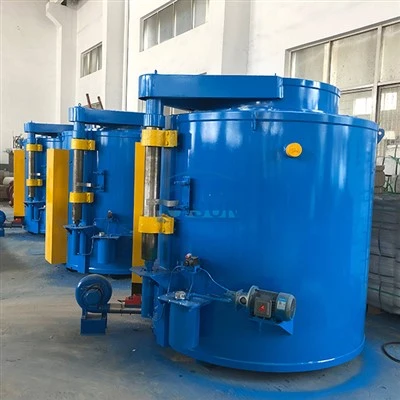
- Hinged swing covers.
- Integrated lifting mechanisms.
- Ceramic fiber module linings.
- Brick linings.
- Electrical resistance heating elements.
- Gas-fired radiant tubes.
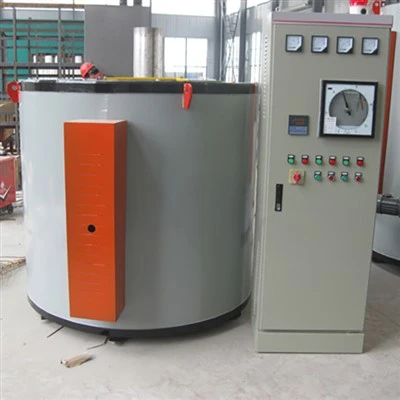
The All-fiber Lined Well Furnace uses ceramic fiber modules on the cylindrical furnace walls, bottom and inner surface of the furnace cover.
For large workpieces and ring components, a large-scale well furnace design in our product range uses a stainless steel air guide cylinder and a large circulation fan.
3. Heating, Temperature Control and Auxiliary Systems
Heating and control configurations depend on the furnace type.
| Configuration |
Available Options or Conditions |
| Heating method |
Electrical resistance heating or gas-fired radiant tubes |
| Furnace lining |
Ceramic fiber lining or brick lining |
| Temperature control |
PLC or PID control |
| Protective atmosphere |
Nitrogen or argon, where configured |
| Cooling |
Forced-air cooling or water-jacket cooling, where configured |
| Vacuum system |
Vacuum pumping system for Vacuum Well Furnace |
| Vacuum furnace atmosphere |
Vacuum, argon or nitrogen |
A historical large-scale well furnace design for ring components and oversized carbon steel parts specified a heating temperature range of 650–1000°C. It used multi-zone temperature control and was available with electric, gas-fuel or liquid-fuel heating.
This temperature range applies to that specific large-scale furnace design, not to every Well Furnace model.
4. Well-type Quenching Furnace Configurations
For quenching applications, the furnace and quenching tank can be arranged in two configurations:
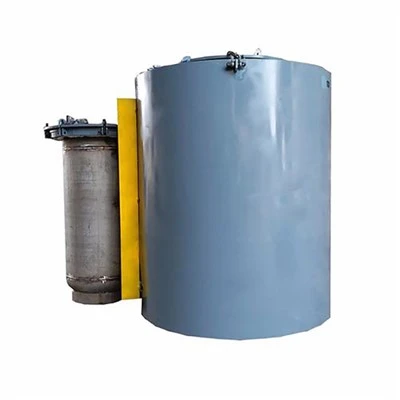
Integrated upper-tank arrangement: The quenching tank is positioned above the furnace.
Adjacent-tank arrangement: The quenching tank is positioned beside the furnace.
The furnace cover can use vertical lifting, hinged swinging or an integrated lifting mechanism.
These configurations define the furnace layout and workpiece transfer route within the workshop.
5. Manufacturing and Supply
Danyang Dingfeng Industrial Furnace Co., Ltd. manufactures industrial furnaces for metal heat treatment and related industrial heating processes.
Our product range includes pit furnaces, pit-type resistance furnaces, vacuum furnaces, annealing furnaces and protective-atmosphere heat treatment furnaces.
Available heating energy options across our furnace range include electricity, natural gas, coal gas and industrial fuel oil. Vacuum, protective-atmosphere and controlled-atmosphere furnace designs are also included in our product range. The available configuration depends on the selected furnace model.
6. Request a Well Furnace Quotation
Send us your workpiece dimensions, material, heat treatment process, required operating temperature and estimated batch weight.
You can also provide workpiece drawings or sample photos if detailed dimensions are not yet available.
We can use this information to discuss the appropriate Well Furnace type, furnace structure, heating method and auxiliary equipment configuration for your project.