

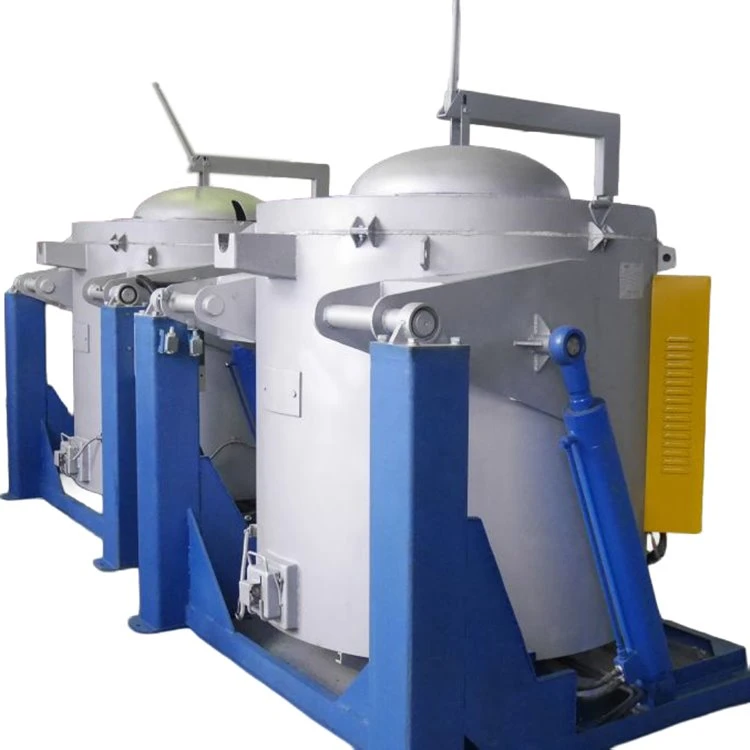

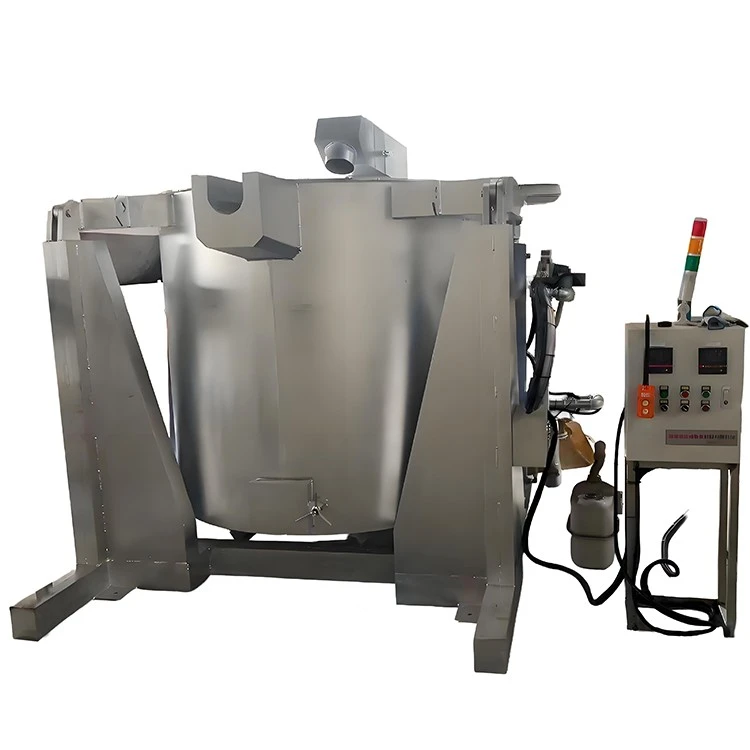
Gas Crucible Furnace
Gas crucible furnace runs on gas – natural gas or light diesel – and uses a crucible as the container for melting metal. The gas burners generate heat, transfer it to the crucible, and the metal inside melts. Pretty straightforward.
Danyang Dingfeng Industrial Furnace Co., Ltd. is one of the most reliable manufacturers and suppliers of gas crucible furnace in China. If you're going to wholesale durable gas crucible furnace made in China, welcome to get pricelist from our factory. All customized products are with high quality and low price.
Product Definition
Gas crucible furnace runs on gas – natural gas or light diesel – and uses a crucible as the container for melting metal. The gas burners generate heat, transfer it to the crucible, and the metal inside melts. Pretty straightforward.

Working Principle
The burners fire up around the crucible. Heat goes through the crucible wall into the metal. That's it. No heating elements – it's gas, so you've got flames. The crucible gets hot, the metal inside gets hot, it melts.
Crucible furnaces are one of the simpler melting setups. Mainly used for non-ferrous metals with lower melting points – copper, aluminum, bronze, brass, zinc. You don't use these for steel because steel needs higher temperatures and a crucible won't handle it well.

Features
Natural gas or light diesel
Cleaner than heavy oil or coal. The workshop stays tidy. No soot everywhere. Easier to manage than solid fuel.
Good thermal efficiency.
Operating costs are lower than electric crucible furnaces. Why? Gas is often cheaper than electricity per unit of heat. Plus you get faster melt rates. No heating elements to replace every few months – that saves money too.
We use imported burners – known brands
They burn clean. Complete combustion means no smoke, no smell. The exhaust is mostly water vapor and CO2. The burner design has multiple heat flow paths – that means the flame wraps around the crucible instead of just hitting one spot. Better heat transfer, less fuel wasted.
Applications
Non-ferrous metal smelting. That's the main use. Copper, bronze, aluminum alloys. The furnace heats the metal fast and even. For copper alloys – bronze, brass – you need consistent temperature or you get bad castings. A foundry I know runs a gas crucible furnace for bronze bushings. They hold at 1150°C. Castings come out solid, no porosity.
Customization
Dingfeng Industrial Furnace. We build to your needs.
- Lining configuration. Inner layer refractory brick, outer layer fiber insulation. The thickness and material grade change depending on your temperature. Run hot – 1200°C for copper – you want thicker refractory. Run cooler – 750°C for aluminum – you can use more fiber. Fiber saves energy.
- Crucible size and material. Capacities from 50 kg up to 1000 kg. Crucible material: heat resistant steel or silicon carbide. SiC transfers heat better and lasts longer at high temperatures. Steel is cheaper but doesn't like thermal shock. For aluminum, SiC is better. For zinc, steel is fine.
- Heating system. Gas fired – natural gas or diesel. Or electric if you prefer. I usually ask what your local energy prices are. Where electricity is cheap, electric makes sense. Where gas is cheap, gas wins. No right answer for everyone.
- Automation. Automatic metal dosing – the furnace pours itself. Temperature data logging. PLC control for full automation. I've built gas crucible furnaces that run a full shift with one guy just watching.
- Fume extraction. Exhaust ports and a hood. If you're melting dirty scrap – painted aluminum, oily zinc – you need extraction. The fumes are nasty. Even clean metal gives off some fume. Better to vent it.
Hot Tags: gas crucible furnace, China gas crucible furnace suppliers, factory, crucible furnace, gas furnace, Insulation Crucible Furnace, Oil Fired Crucible Furnace, Refractory Clay Crucible, Well Crucible Furnace



Send Inquiry
