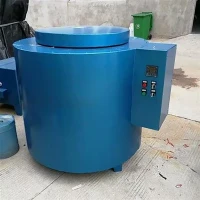
Basic Characteristics Of Electric Resistance Furnace
Apr 08, 2026
The fundamental characteristic of a resistance furnace lies in its heating method. It uses electrical energy as its energy source, heating materials through resistance elements. This heating method does not rely on open flames, and the heat source is stable and controllable, thus offering high safety during operation and avoiding the exhaust emissions problems associated with fuel combustion.
Resistance furnaces are characterized by precise temperature control. Through the cooperation of a temperature control system and thermocouples, the furnace temperature can be monitored and adjusted in real time, maintaining it within the set range with minimal fluctuations. This stable temperature control capability makes it particularly suitable for heat treatment, experimental, and precision machining applications where high process temperatures are required.
Resistance furnaces also feature a relatively simple structure and high thermal efficiency. Because electrical energy is directly converted into heat energy, energy loss is minimal, resulting in high heat utilization. Furthermore, its clear equipment structure facilitates maintenance and operation, making it suitable for long-term stable operation and widely used in industrial and laboratory settings.