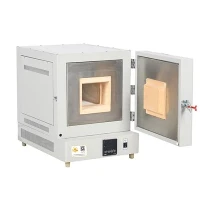
Testing Standards For Vacuum Furnaces
Apr 19, 2026
The testing standards for vacuum furnaces are primarily used to ensure safe operation, process stability, and heat treatment quality. Their core components include vacuum level testing, temperature control accuracy testing, safety performance testing, and structural integrity checks.
Vacuum Level and Leakage Detection: The vacuum furnace should be evacuated according to the prescribed vacuuming procedure. The furnace pressure should be measured using a vacuum gauge or pressure sensor, and the sealing performance should be evaluated through a pressure rise rate test. Industry standards typically require a pressure rise rate of ≤0.5 Pa/h for high-vacuum furnaces to ensure long-term vacuum stability. Simultaneously, flanges, seals, valves, and pipe connections need to be checked for leaks.
Temperature Control Accuracy Testing: The uniformity and control accuracy of the furnace temperature are tested using thermocouples, temperature controllers, and recording instruments. Standards require temperature control deviations to be generally within ±1~3℃, and the temperature difference between different measuring points within the furnace must meet process requirements to ensure uniform heating of the workpiece during the heating process and to satisfy heat treatment process standards.
Safety and Electrical Performance Testing: The electrical system must comply with industrial electrical safety standards, including functional testing of grounding, insulation, power protection, over-temperature protection, and emergency power-off devices. Safety valves, pressure gauges, and alarm systems also need to be calibrated to ensure the equipment can automatically protect itself under abnormal operating conditions and prevent accidents.
Structural and Material Inspection: The furnace body, furnace chamber, heating elements, and supporting components need to be inspected for welding quality, material properties, and high-temperature resistance to ensure that they will not deform, crack, or fail under high-temperature and vacuum environments. If necessary, the structural integrity of the furnace body can be verified through non-destructive testing, pressure testing, or thermal cycling testing.