

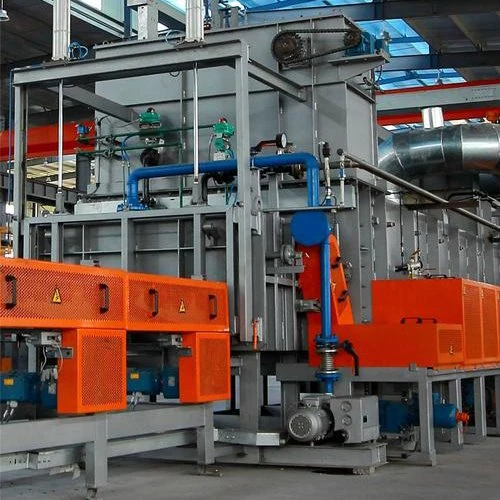

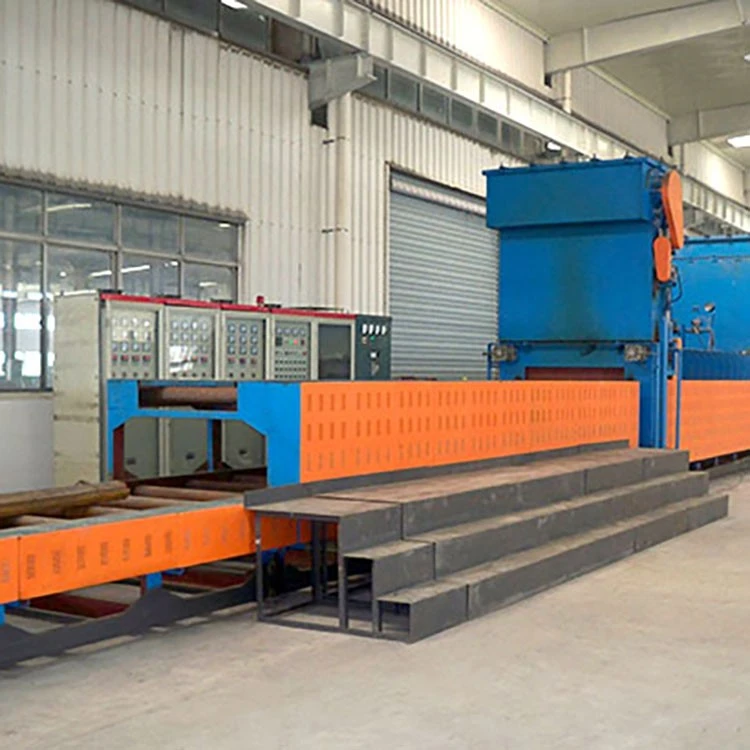
Roller Bottom Tempering Furnace
It's a – not a . Parts go in one end, move through on rollers, come out the other end. Used for, or.
The hearth has that carry the through the . Works well for high volume production lines where you need consistent results. Steel pipes, plates, shafts, castings – if it's long or you're running a lot of them, this design makes sense.
Danyang Dingfeng Industrial Furnace Co., Ltd. is one of the most reliable manufacturers and suppliers of roller bottom tempering furnace in China. If you're going to wholesale durable roller bottom tempering furnace made in China, welcome to get pricelist from our factory. All customized products are with high quality and low price.
Product Definition
It's a – not a . Parts go in one end, move through on rollers, come out the other end. Used for, or.
The hearth has that carry the through the . Works well for high volume production lines where you need consistent results. Steel pipes, plates, shafts, castings – if it's long or you're running a lot of them, this design makes sense.

Working Principle
Let me walk you through how it runs.
- Loading first. Put your on the inlet roller table. By hand or with an automated feeder – depends on your setup.
- Continuous heating. The rollers turn, carry the parts through multiple . Each zone has its own temperature control. You set a curve – for example, ramp up to 600 degrees in zone one, hold there in zone two and three.
- Soaking. As the parts move through, they spend a certain amount of time at the target temperature. How long? Depends on the roller speed and how long the furnace is. Rollers run slower for thicker parts that need more soak time. Faster for thin parts.
- Discharge and cooling. Parts come out the other end onto the outlet roller table. They cool in air or under forced fans. Sometimes water spray if you need faster cooling. Depends on the material.

Features
- Continuous production. No stopping to load and unload. The rollers keep moving. I've got a customer running steel tubes through one of these – 300 tons per week, three shifts. They wouldn't get half that with a batch furnace.
- Temperature uniformity. We split the furnace into zones – typically three to six zones depending on length. Each zone has its own thermocouple and control. With good circulation fans, we hold within plus or minus 5 degrees C across the whole heating length. I measured a 12 meter furnace once – worst spot was 3 degrees off. That's fine for .
- Precise control. PLC or PID depending on what you want. The system controls both temperature and roller speed. Speed control matters because it sets your soak time. If your speed varies, your hardness varies.
- Energy saving. Good insulation – ceramic fiber or high-density wool. Heat loss is low. A customer replaced his old brick-lined roller furnace with our fiber version. His gas bill dropped 22 percent. Same production.
- Stable roller transmission. The rollers are heat resistant alloy – typically 310 stainless or RA330 for higher temperatures. Bearings are water cooled if the furnace runs above 700 degrees. Without cooling, the bearings cook and seize. We learned that the hard way years ago.
- High automation level. You can set it up to run automatically. Feeder, rollers, cooling, unloading – all tied together. One customer runs theirs with just one guy monitoring. The rest is automatic.
- Durable structure. Heavy steel frame. Refractory lining in the . Rollers wear out eventually – that's normal. But the furnace body itself lasts 20 years or more if you maintain it.
- Flexible customization. Heating zones – we can add more if you need finer control. Conveyor width – standard is 600mm to 1500mm, but we've gone wider. Temperature range – up to 850 degrees for , higher for if you need it.
Applications
Steel pipe and tube manufacturing
Seamless and welded pipes. A customer runs 100mm diameter tubes through their. Tempering at 650 degrees. Cycle time is about 90 minutes from entry to exit. Stress relief before final sizing.
Automotive industry
Axles, transmission shafts, long bar components. One supplier runs 4140 axle shafts, 1.2 meters long. Tempering at 580 degrees. Roller speed set so each shaft spends 75 minutes in the furnace. Hardness comes out at 28-32 HRC across the whole length.
Bearing manufacturing
Bearing rings and rollers. Small parts but high volume. They use a mesh belt on top of the rollers sometimes, so small parts don't fall through. Temper at 180 to 250 degrees for most bearing steels.
Heavy machinery
Large steel plates and structural components. One customer runs 50mm thick plates for mining equipment. Temper at 600 degrees, slow roller speed because thick plates need longer soak. The furnace is 15 meters long – plates take two hours to go through.
Fastener production
Bolts, nuts, screws in bulk. Mesh belt furnace with roller support. Run them through at 450 degrees for stress relief after quenching. Hundreds of kilos per hour.
Equipment Structure
Let me break down the parts.
Furnace body
Heavy steel structure. Welded sections bolted together. Inside is insulation – ceramic fiber modules or brick. For Roller bottom tempering furnace, fiber is better because cycles are faster. Bricks hold more heat, which is fine if you run 24/7.
Roller conveyor system
Heat resistant alloy rollers. Spaced every 300 to 500 mm depending on part size. Each roller has a drive chain or gear. One motor drives all rollers through a common shaft, or each zone has its own motor for independent speed control. We've done both.
Heating system
Electric or gas. Electric uses resistance elements mounted above and below the rollers.
Furnace chamber
Multi-zone design. Each zone is separated by a small gap or a curtain. Keeps heat from migrating between zones. You want zone one at 400 degrees, zone two at 600, zone three at 600. Without separation, you can't hold different temperatures.
Temperature control system
PLC cabinet. Programmable. You can store multiple recipes – different temperatures and speeds for different parts. Touchscreen or push buttons, whichever your guys prefer.
Cooling zone
After the last heating zone, parts go through a cooling section. Can be just open air, or forced fans, or water curtains. We built one for a spring steel customer – they needed controlled cooling at 50 degrees per minute. Used variable speed fans.
Hot air circulation system
Circulation fans inside each heating zone. Without them, the temperature near the rollers is different from the temperature near the roof. Fans even it out. Usually one fan per zone, 2 to 5 kW each.
Insulation layer
Ceramic fiber modules, 250 to 350 mm thick. Or refractory brick if the customer insists. Brick is heavier and takes longer to heat up. Fiber is lighter and responds faster.
Safety protection system
Over-temperature protection – independent thermocouple that shuts everything down if it gets too hot. Conveyor overload protection – if a roller jams, the motor trips. Emergency stops at both ends. Alarms for burner failure if it's gas fired.
Hot Tags: roller bottom tempering furnace, China roller bottom tempering furnace suppliers, factory, Full Fiber Tempering Furnace, Mesh Belt Tempering Furnace, Pit Type Tempering Furnace, Push Rod Tempering Furnace, Roller Bottom Tempering Furnace, tempering furnace


Send Inquiry
