

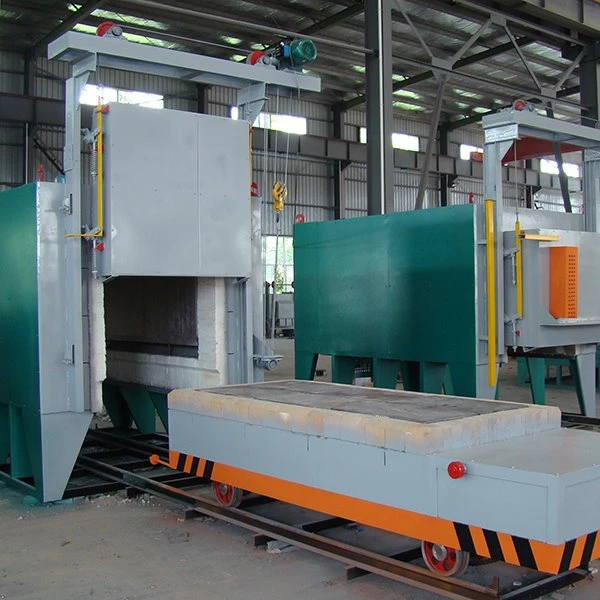
Full Fiber Tempering Furnace
Full fiber tempering furnace. The lining is all ceramic fiber – no bricks. Why fiber? Low heat storage, fast heat-up, saves power. Uses about thirty to fifty percent less energy than a brick furnace. Depends on your cycle.
Danyang Dingfeng Industrial Furnace Co., Ltd. is one of the most reliable manufacturers and suppliers of full fiber tempering furnace in China. If you're going to wholesale durable full fiber tempering furnace made in China, welcome to get pricelist from our factory. All customized products are with high quality and low price.
Product Definition
Full fiber tempering furnace. The lining is all ceramic fiber – no bricks. Why fiber? Low heat storage, fast heat-up, saves power. Uses about thirty to fifty percent less energy than a brick furnace. Depends on your cycle.
Working Principle
- Heats up fast. Fiber doesn't soak up much heat – that's the whole idea. You turn the power on, heat goes straight into the parts. A brick furnace? You gotta heat up the bricks first. Those bricks weigh tons. They store heat like crazy.
- Typical tempering range is 150 to 650 degrees C. A full fiber tempering furnace gets there in maybe thirty or forty minutes. Same size brick furnace? Could take ninety minutes. That extra hour adds up if you're running three shifts.
- Even heat distribution. We put high velocity fans inside. Circulate the hot air around the chamber. Without fans, the top gets hotter than the bottom. With fans? We hold within plus or minus five degrees C across the whole load. I've measured it with nine thermocouples. Worst spot was near the door – maybe four degrees low.
- Controlled cooling. After the soak cycle, you cool the parts. Either leave them in the furnace or pull them out if it's a trolley type. Fiber cools down fast – low heat storage means the furnace doesn't stay hot for hours. Ready for the next batch quicker.

Features
- Saves power. The all-fiber lining insulates well and doesn't store much heat.
- Even temperature. The fiber is lightweight. That means you can put heating elements and circulation fans wherever you want. Not limited by brick shapes. We typically get within plus or minus five degrees. Some customers demand three degrees.
- Fast response. Heats up fast, cools down fast. Their cycle: heat to 560 degrees, hold two hours, cool to 300, then unload. With their old brick furnace, the whole cycle took eight hours. With our fiber furnace? Five and a half hours. That's an extra batch every two days.
- Handles thermal shock. Fiber doesn't crack when you cycle it fast. Bricks do. I've seen brick linings spall – pieces fall off the walls – after a few hundred cycles of heating and cooling. Fiber linings? I've got customers who've run ten thousand cycles on the same modules. Still fine.
- Clean and low maintenance. Fiber doesn't make dust like brick. No loose mortar. No crumbling. If a module gets damaged – say someone bumps it with a forklift – you pull it out and stick a new one in. Takes maybe an hour.
- Lightweight. A fiber lined furnace weighs about one tenth of a brick lined furnace of the same size.
Applications
Automotive manufacturing
Engine parts, gears, shafts, springs.
General machinery
Castings, weldments, machined parts. Stress relieving and tempering. A pump manufacturer runs ductile iron housings. Six hundred degrees, hold for two hours, slow cool.
Tool and die industry
Molds and cutting tools after hardening.
Fastener and bearing production
Bolts, nuts, bearing rings. Batch tempering.
Hot Tags: full fiber tempering furnace, China full fiber tempering furnace suppliers, factory, Full Fiber Tempering Furnace, Mesh Belt Tempering Furnace, Pit Type Tempering Furnace, Push Rod Tempering Furnace, Roller Bottom Tempering Furnace, tempering furnace


Send Inquiry
