

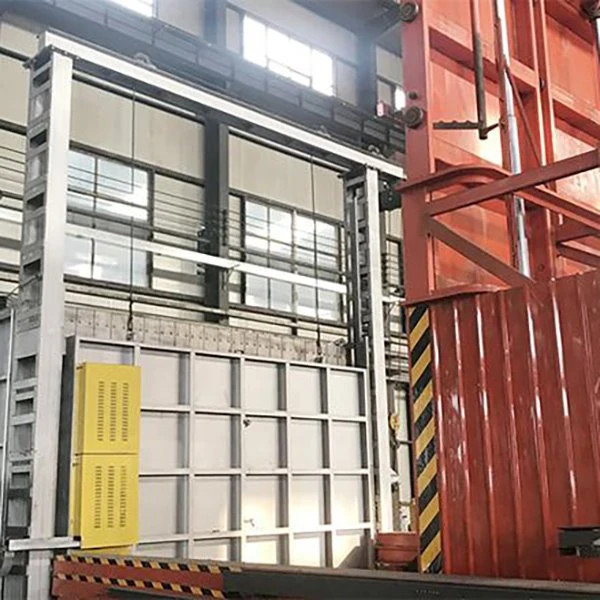

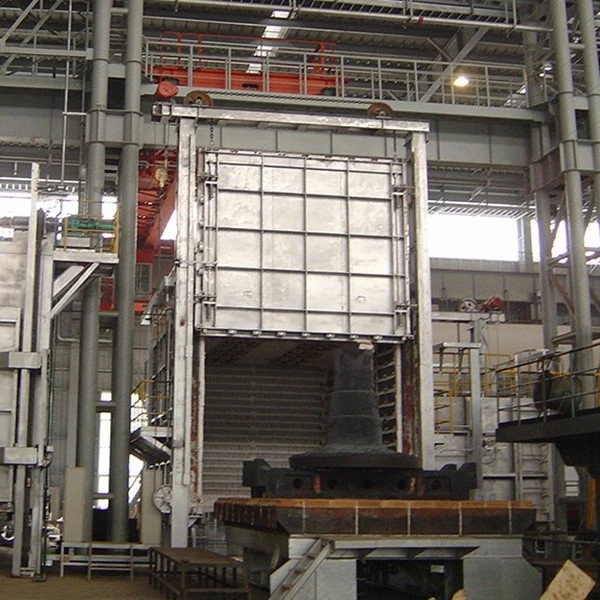
All-fiber Quenching Furnace
This is an all-fiber quenching furnace. The main difference from a regular furnace? The lining. Instead of refractory bricks, we use ceramic fiber modules. That changes everything – faster heat-up, lower power bill, better efficiency. Not magic, just better insulation.
You use it for quenching, hardening, annealing, tempering – the usual heat treatment jobs. But the all-fiber design really shines where you need fast cycles and good temperature uniformity.
Danyang Dingfeng Industrial Furnace Co., Ltd. is one of the most reliable manufacturers and suppliers of all-fiber quenching furnace in China. If you're going to wholesale durable all-fiber quenching furnace made in China, welcome to get pricelist from our factory. All customized products are with high quality and low price.
Product Definition
This is an all-fiber quenching furnace. The main difference from a regular furnace? The lining. Instead of refractory bricks, we use ceramic fiber modules. That changes everything – faster heat-up, lower power bill, better efficiency. Not magic, just better insulation.
You use it for quenching, hardening, annealing, tempering – the usual heat treatment jobs. But the all-fiber design really shines where you need fast cycles and good temperature uniformity.

Working Principle
Let me go through the steps.
- First. Load your workpieces into the chamber. Could be gears, shafts, dies – whatever you're running.
- Second. Close the door. Seals up.
- Third. Fire the heating elements or burners. Heat goes into the chamber.
- Fourth. The ceramic fiber insulation does its job. Low heat storage means most of the energy goes into the workpieces, not into heating up bricks. I've seen brick furnaces take two hours to reach 850°C. An all-fiber furnace of the same size does it in forty minutes.
- Fifth. The controller follows your curve. PID or PLC, depending how you spec it.
- Sixth. Hit your target temperature and soak time. Then transfer the workpieces to the quench medium fast.
- Seventh. Quench. Water, oil, salt bath, polymer – whatever you need. That locks in the hardness.
- The whole point is speed and efficiency. The fiber lining lets you cycle faster because you're not waiting for bricks to cool down or heat up.

Features
- Superior energy efficiency. Let me give you numbers. A brick lined furnace at 900°C loses about 25% of its heat through the walls – bricks conduct. Ceramic fiber at the same temperature loses maybe 8-10%. I've got a customer who switched from brick to fiber on a 200kW furnace. His monthly power bill dropped from $4,500 to $2,800. That's a 38% saving. Pays for the upgrade in about two years.
- Fast temperature response. A fiber furnace gets to temperature about twice as fast as brick. For a typical 850°C hardening cycle, brick might take 90 minutes to stabilize. Fiber takes 40-45 minutes. That extra hour per cycle adds up if you're running three shifts.
- Temperature uniformity. We spec ±5°C on our standard units. But here's the thing – fiber lets you put heating elements wherever you want. You're not limited by brick shapes. We usually put elements on the side walls and the back wall, sometimes the door. With good placement and circulation fans, I've seen ±3°C on a 1.5m x 1m x 1m chamber. One customer runs aerospace parts in that furnace. They certify every batch.
- Thermal shock resistance. Bricks crack when you cycle them fast. Heat a brick furnace to 900°C, open the door, let cold air in – you'll hear the bricks ping. That's thermal stress. Fiber doesn't do that. The material is flexible. It expands and contracts without breaking. I've seen fiber linings last ten years on all-fiber quenching furnaces. Brick linings on the same duty? Maybe three to four years.
- Lightweight structure. Fiber weighs about one tenth as much as brick per cubic meter. A 2m x 2m x 1m lining in brick is maybe 8 tons. Fiber is 800 kg. That means the steel frame can be lighter, the foundation doesn't need to be as thick. Saves money on installation.
- Easy maintenance. A damaged brick lining – you're grinding out mortar, cutting out old bricks, fitting new ones. Takes days. A damaged fiber module? You pull out the old one, slide in a new one, tighten the anchor. Takes maybe an hour. I've had customers keep a box of spare modules on the shelf. When they see a hot spot on the shell, they swap the module next shift.
Applications
Automotive parts
Gears, shafts, bearings. One of my customers runs a 900°C hardening cycle for 8620 steel gears. Load is about 800 kg per batch. Soak for 90 minutes, then oil quench. Their cycle time including heat-up is three and a half hours. With their old brick furnace, same load took five hours. That's an extra batch every two days.
Tool and die manufacturing
Molds and cutting tools. Temperature precision matters here. A die steel like H13 needs 1020°C for hardening. Go 10 degrees too high and you get grain growth. Go 10 degrees low and you don't fully harden. Our fiber furnace holds 1020 ±4°C on a customer's 500 kg die load. They've been running it for six years.
General machinery
Steel components, fasteners, hardware. Nothing exotic. But the cycle speed helps. One fastener maker runs 850°C for 45 minutes on M12 bolts. Their production rate went up 35% after switching to fiber because the furnace recovers temperature faster between loads.
Aerospace
High strength alloy components. Inconel, 17-4 PH, that kind of stuff. A customer in the Pacific Northwest runs 1040°C solution treatment on Inconel 718 turbine parts. Soak for 60 minutes, then rapid quench. They picked fiber because the brick furnace they had couldn't hold the high temperature without the door frame warping. Fiber runs cooler on the outside.
Equipment Structure
Let me break down the parts of all-fiber quenching furnace.
- Fiber lining system. That's the heart of it. Ceramic fiber modules anchored to the steel shell with Inconel or stainless steel studs. The studs are important – regular steel would creep and fail at high temperature. Behind the modules we put a backup layer of fiber blanket, maybe 25mm thick. That covers the gaps between modules. Without that blanket, you get hot spots on the shell after a few months.
- Steel shell. Welded steel plate and sections. Nothing special – just needs to be stiff enough that the door seals properly. We use 6mm plate for small furnaces, up to 12mm for big ones. The shell also holds the anchors for the fiber modules. Anchor spacing is usually 250mm to 300mm. Too wide and the modules sag.
- Heating elements. Resistance ribbons or wires, or burners if it's gas fired. For electric, we embed the elements in the fiber modules – there are slots cut into the modules. That's the nice thing about fiber: you can machine it. For gas, we mount burners through the shell and the fiber, with ceramic burner blocks so the flame doesn't hit the fiber directly.
- Sealing system. Soft seals, fiber to fiber. The door has a layer of fiber blanket that presses against the front face of the chamber lining. When the furnace heats up, the fiber expands and the seal gets tighter. That's the opposite of brick. Brick seals leak more when they get hot because the steel frame expands and the bricks don't. Fiber seals self tighten.
- Control system. PLC and SCR for electric furnaces. The SCR regulates power to the elements – no mechanical contactors clicking on and off. That gives you smoother temperature control. For gas furnaces, we use modulating burners with proportional valves.
Hot Tags: all-fiber quenching furnace, China all-fiber quenching furnace suppliers, factory


Send Inquiry
