

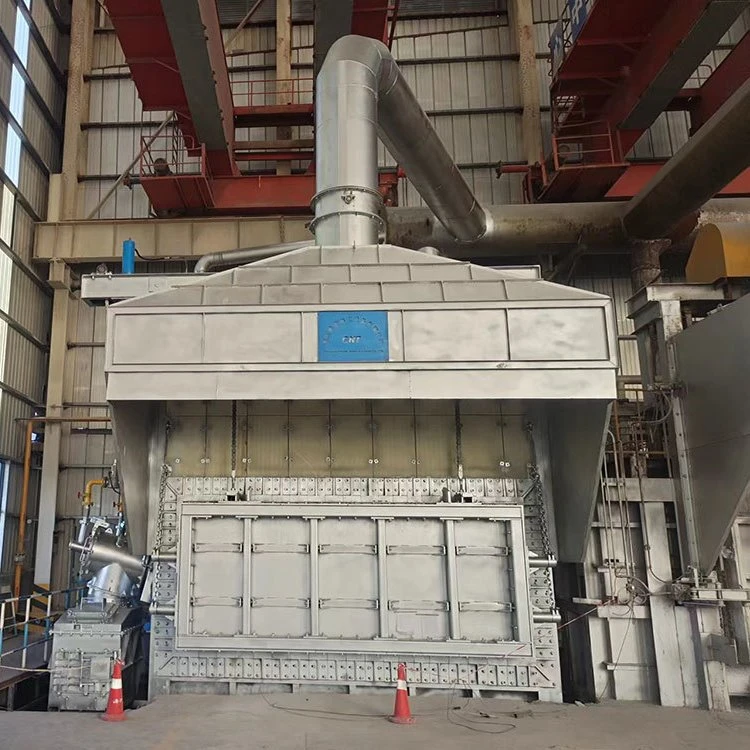

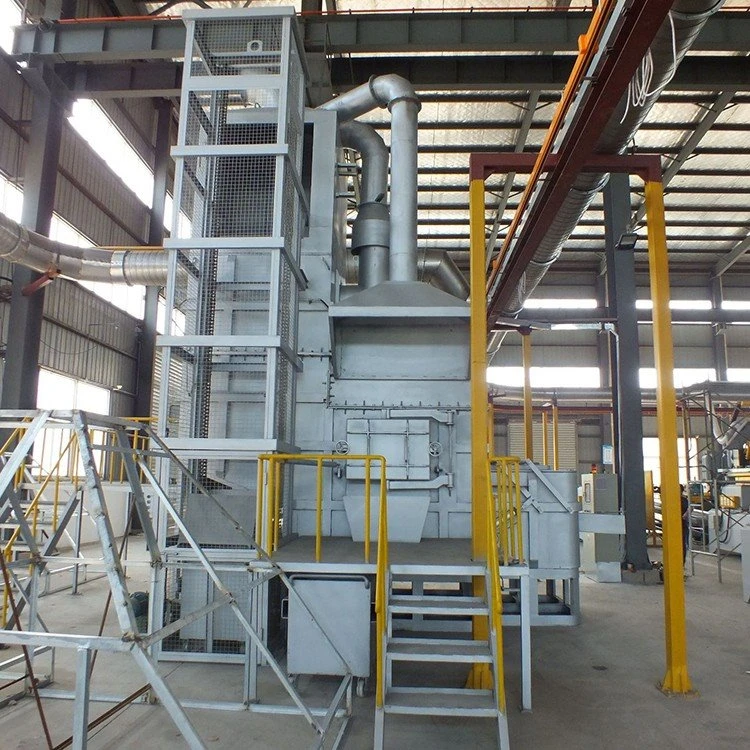
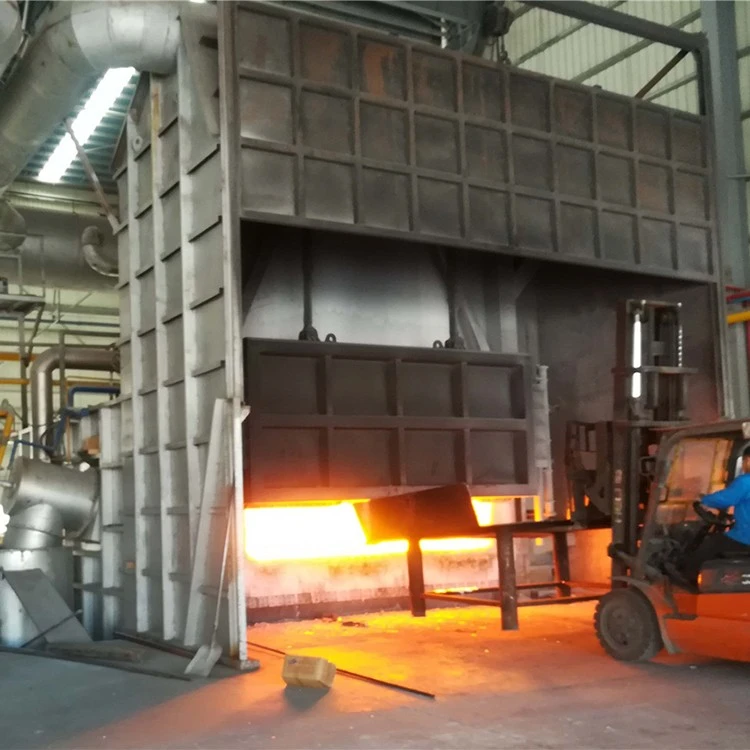
Aluminum Quenching Furnace
An aluminum quenching furnace – we call it a solution annealing furnace sometimes. What it does: heat aluminum workpieces to a specific temperature so the alloying elements dissolve into the solid solution, then quench it fast to lock that structure in. That's how you get maximum strength and hardness out of heat treatable aluminum alloys like 6061, 7075, or A356.
Danyang Dingfeng Industrial Furnace Co., Ltd. is one of the most reliable manufacturers and suppliers of aluminum quenching furnace in China. If you're going to wholesale durable aluminum quenching furnace made in China, welcome to get pricelist from our factory. All customized products are with high quality and low price.
Product Definition
An aluminum quenching furnace – we call it a solution annealing furnace sometimes. What it does: heat aluminum workpieces to a specific temperature so the alloying elements dissolve into the solid solution, then quench it fast to lock that structure in. That's how you get maximum strength and hardness out of heat treatable aluminum alloys like 6061, 7075, or A356.

Working Principle
Let me walk you through how this thing runs.
- Loading. Put your aluminum parts into the furnace chamber. Or if it's a melting version, into the crucible. We build both.
- Heating. Electric elements or gas burners – depends what you ordered. Heat goes up.
- Temperature control. A controller follows your curve. PID or PLC, depends how fancy you want.
- For melting: you go above the melting point. Aluminum melts around 660°C, but you typically run melting furnaces at 720°C to 760°C for good fluidity.
- For solution treatment – that's the heat treatment part, not melting – you hold below the melting point. Typical temperatures: 6061 aluminum at 530°C, 7075 at 470°C, A356 casting alloy at 540°C. Soak time depends on section thickness. Rule of thumb: one hour per 25mm of thickness. So a 75mm thick part soaks for three hours.
- Transfer. This is the critical step. You move the hot parts from the furnace to the quench tank. Fast. Every second counts.
- Quenching. The tank has water, oil, or polymer. Cools the parts rapidly. That freezes the microstructure.
- That's the cycle. The whole thing – heat, soak, transfer, quench.

Features
- Precise temperature control. We use PLC or PID. But here's the real detail: for aluminum solution treatment, you need accuracy within ±5°C. Go above that range and you risk incipient melting – the grain boundaries melt. Go below and you don't fully dissolve the alloying elements. One customer was running 7075 parts at 480°C instead of 470°C – just 10 degrees high – and started seeing blistering on the surface. Came from overheating.
- Rapid quenching capability. Transfer time from furnace to quench should be under ten seconds for most aluminum alloys. For thin sections, under five seconds. We use a drop-bottom mechanism or a tilt table. A typical manual transfer – guys pulling a basket out with tongs – takes twenty to thirty seconds. That's too slow. The parts start cooling in air and you lose strength.
- Temperature uniformity. We spec ±5°C across the working zone. For a 2m x 2m x 1.5m chamber, we place nine thermocouples – corners, center, midpoints. I did a test once on a competitor's furnace. The top zone was 15°C hotter than the bottom. Their parts came out with inconsistent hardness. Same load, different results.
- Energy efficient. Ceramic fiber insulation, 250mm to 300mm thick. Heat loss on a 540°C holding cycle is about 30 kW for a mid-sized furnace. A brick lined furnace of the same size loses maybe 60 kW. Payback on the fiber upgrade is usually twelve to eighteen months depending on your electricity price.
- Heating methods. Electric or gas. Electric gives better temperature uniformity because you can zone control more precisely. Gas heats faster but you need good circulation. We've done both. For aerospace work, most customers want electric. For foundries doing high volume, gas is fine.
- Production efficiency. Batch or continuous. We build both. A continuous furnace for aluminum wheels runs maybe 60 wheels per hour. Batch furnace for large forgings – one load per shift, maybe 8 to 10 tons.
- Durable structure. Heat resistant steel for the chamber. 310 stainless or Inconel if you're doing really high temp work. The refractory lining is low cement castable rated for 1200°C even though you only run at 550°C. Why over-spec? Because the lining lasts longer.
Applications
Automotive
Aluminum wheels, engine blocks, chassis parts. A wheel customer runs a T6 cycle: solution treat at 535°C for 8 hours, quench in water at 60°C, then age at 175°C for 5 hours. Their wheels test at 280 MPa tensile. Minimum spec is 240. They've got margin.
Aerospace
Aircraft structural components – wing spars, fuselage frames, seat tracks. High strength aluminum profiles. One aerospace shop runs 7075 extrusions. Solution treat at 470°C for 2 hours (section thickness 20mm), quench in polymer, age at 120°C for 24 hours. They inspect every part for distortion. The quench is the hardest part to control.
General manufacturing
Aluminum extrusions, forgings, castings needing T6 temper. A small shop I know runs a aluminum quenching furnace for 6061 forgings – valve bodies, pump housings. Their cycle: heat to 530°C, soak 90 minutes, quench in room temperature water, age at 175°C for 8 hours. Simple, works fine.
Customization Capabilities
Dingfeng Industrial Furnace – we change things based on what you run. Call it customization if you want. I just call it building what you need.
- Size. We've built chambers from 1m x 1m x 1m for small job shops up to 6m x 3m x 3m for aerospace extrusion lines. The big one held 4 tons of 7075 profiles.
- Temperature. Standard units go to 600°C. That covers all aluminum solution treatment. If you need higher for other alloys, we can go to 1000°C but that's a different design.
- Load capacity. Trolley furnaces handle 500 kg to 10 tons. Pit furnaces handle more – up to 30 tons for big forgings.
- Functional. Quench tank options: water, polymer, oil. Agitated or static. Heated quench or cold. Transfer mechanisms: drop bottom, tilt table, pull out basket. We've done all of them.
- Heat source. Electric or gas. Electric is more common for aluminum because of the temperature uniformity requirement.

Hot Tags: aluminum quenching furnace, China aluminum quenching furnace suppliers, factory, All fiber Quenching Furnace, Aluminum Quenching Furnace, Horizontal Quench Furnace, quenching furnace


Send Inquiry
