

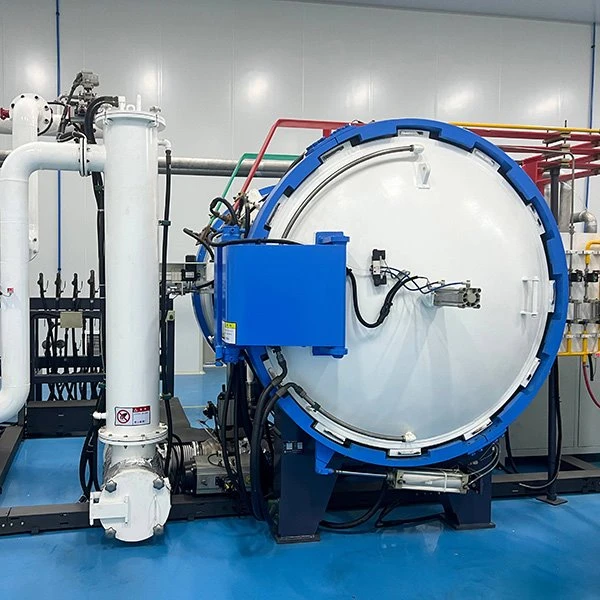

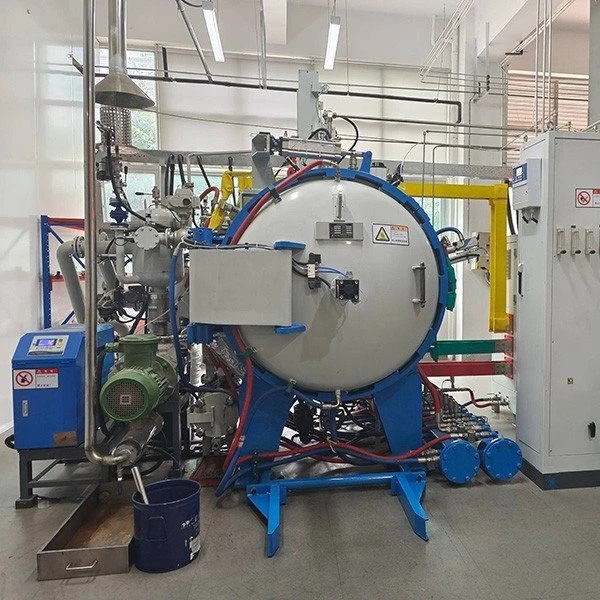
Vacuum Sintering Furnace
You put materials in a vacuum sintering furnace and sinter them under protection. Heating can be resistance, induction, or microwave – depends on the setup.
The induction version uses electromagnetic induction. The frequency splits into three types: power frequency, medium frequency, and high frequency. They're all vacuum sintering furnaces, just different ranges for different jobs.
Danyang Dingfeng Industrial Furnace Co., Ltd. is one of the most reliable manufacturers and suppliers of vacuum sintering furnace in China. If you're going to wholesale durable vacuum sintering furnace made in China, welcome to get pricelist from our factory. All customized products are with high quality and low price.
Product Definition
You put materials in a vacuum sintering furnace and sinter them under protection. Heating can be resistance, induction, or microwave – depends on the setup.
The induction version uses electromagnetic induction. The frequency splits into three types: power frequency, medium frequency, and high frequency. They're all vacuum sintering furnaces, just different ranges for different jobs.

Working Principle
First you pull a vacuum, then you backfill with hydrogen – that's your protective atmosphere. The induction coil heats a tungsten crucible. Once the crucible gets hot, the heat radiates to the workpiece sitting nearby. That's how sintering happens.
One thing the basic description leaves out: the tungsten crucible doesn't heat the parts directly by contact. It's all radiation. So line of sight matters. If the crucible and the workpiece don't see each other, you don't get good heat transfer.

Features
- High density. Sintering in vacuum lets the particles bond without trapped gas. Porosity drops. Density goes up. So does strength, hardness, and ductility. The difference is measurable – a properly sintered carbide part can be 30% harder than one with residual pores.
- No oxidation. The vacuum removes oxygen and the hydrogen atmosphere ties up anything left. No scale, no discoloration. Parts come out bright. For reactive powders like titanium or molybdenum, that's not just cosmetic – oxidation ruins the mechanical properties entirely.
- Debinding works. The vacuum helps pull out organic binders and lubricants. They vaporize and get pumped away. If you leave binders in, they turn into carbon during sintering. That gives you black spots and internal cracks. I've seen it happen more than once.
- High temperature capability. This vacuum sintering furnace runs up to 2200°C or higher. That's hot enough for tungsten, molybdenum, tantalum, and most carbides. But at those temperatures, the tungsten crucible itself starts to soften and creep. You can't just run it at max temp indefinitely. Cycle time matters.
- Dimensional control. Heating in vacuum is more uniform than gas firing, but it's not magic. Shrinkage happens as the powder consolidates. If your green body isn't uniform, the sintered part won't be either. The furnace can't fix bad pressing.
- Material purity. No air means no contamination from oxygen, nitrogen, or water vapor. For high-end alloys, that's critical. But the crucible can still contaminate. Tungsten from the crucible can diffuse into the workpiece at high temperatures. You have to use a barrier coating if purity is absolutely required.
Applications
People use this vacuum sintering furnace for carbide parts, refractory metals, and advanced ceramics. The goals are the same across these industries: remove pores to increase density, prevent oxidation to keep surfaces clean, burn off binders completely, handle high temperatures, hold tight dimensions, and keep the material pure.
Hot Tags: vacuum sintering furnace, China vacuum sintering furnace suppliers, factory, vacuum furnace, Vacuum Melting Furnace, Vacuum Quenching Furnace, Vacuum Sintering Furnace, Vacuum Tempering Furnace


Send Inquiry
