

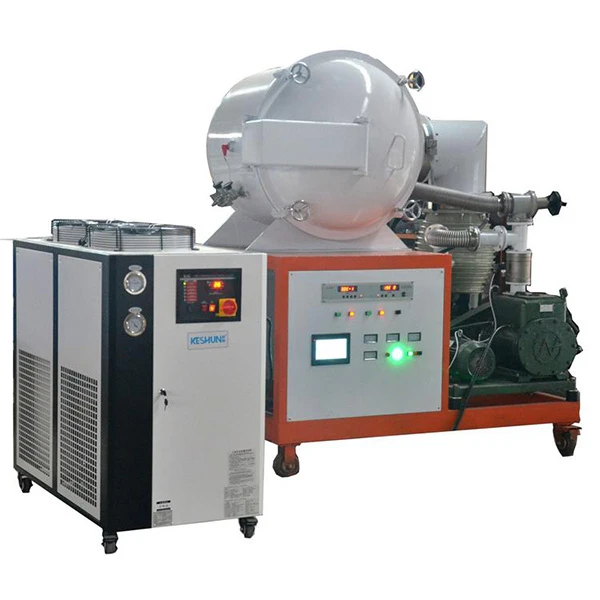

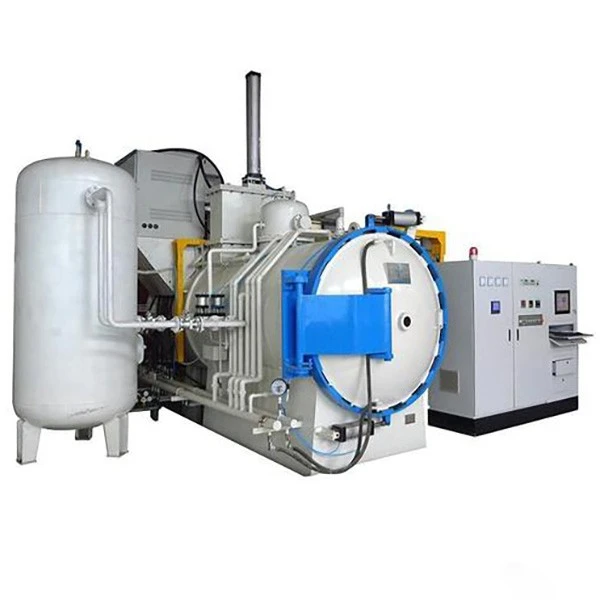
Vacuum Quenching Furnace
Simple explanation – you pull the air out of the vacuum quenching furnace and quench the metal in a vacuum. No oxygen means no oxidation, no decarburization. Parts come out clean with good properties.
Compared to regular quenching furnaces, vacuum gives you better surface protection and less distortion. Good for precision work and tight quality requirements.
Danyang Dingfeng Industrial Furnace Co., Ltd. is one of the most reliable manufacturers and suppliers of vacuum quenching furnace in China. If you're going to wholesale durable vacuum quenching furnace made in China, welcome to get pricelist from our factory. All customized products are with high quality and low price.
Product Definition
Simple explanation – you pull the air out of the vacuum quenching furnace and quench the metal in a vacuum. No oxygen means no oxidation, no decarburization. Parts come out clean with good properties.
Compared to regular quenching furnaces, vacuum gives you better surface protection and less distortion. Good for precision work and tight quality requirements.

Working Principle
First you pull a high vacuum in the chamber. That removes oxygen and other reactive gases. Then you heat the parts with resistance elements – graphite heaters for the high temp models – up to the austenitizing temperature.
After the soak, you cool them fast. Several ways to do it:
High pressure inert gas quenching (nitrogen or argon)
Vacuum oil quenching (on some configurations)
Gas circulation cooling
The whole point is to prevent oxidation, decarburization, and surface contamination, while improving hardness and structure uniformity.

Features
- Clean surface. No oxygen means no scale, no decarb. Parts come out bright. One die customer told me he saved two hours of hand polishing per batch after switching to vacuum.
- Good metallurgy. Vacuum pulls dissolved gases out of the metal. Better toughness, ductility, and fatigue strength. This just happens naturally from the vacuum environment.
- Less distortion. Vacuum heating is radiant – more even than convection heating in a vacuum quenching furnace. Gas quenching is also gentler than oil. So parts don't move as much. A bearing shop saw their distortion drop from 0.08mm to 0.02mm after switching from oil quench to high pressure gas.
- Clean operation. No smoke, no fumes, no pollution. Makes environmental inspections a lot easier.
- Flexible quenching options. High pressure gas or vacuum oil. Different steels need different methods. High speed steel quenches fine in gas. Some alloys still need oil.
- Even temperature. Multi-zone heating keeps temperature deviation within plus or minus 3°C. That matters for long shafts and thick sections.
- High automation and safety. PLC automatic control with safety interlocks. Over-temperature alarms, pressure interlocks, cooling water protection.
Applications
This vacuum quenching furnace handles all kinds of steel – die steel, stainless, bearing steel, alloy steel, carbide, you name it.
Where people use it:
- Tools and dies. Bright quenching of molds, cutting tools, precision miniature bearings. Bearing manufacturers run a lot of these.
- Fuel injection pump parts, nozzles, hydraulic components – carburizing and quenching.
Carbide tool solution treatment.
- High end gears for automotive and railway. Many are now done with vacuum carburizing and gas quenching.
- Aerospace. Engine blades, landing gear parts. These guys have tight specs and want full documentation.
- Also brazing, sintering, solution treatment, annealing for magnetic materials, stainless steel, copper alloys.
Hot Tags: vacuum quenching furnace, China vacuum quenching furnace suppliers, factory, vacuum furnace, Vacuum Melting Furnace, Vacuum Quenching Furnace, Vacuum Sintering Furnace, Vacuum Tempering Furnace


Send Inquiry
