

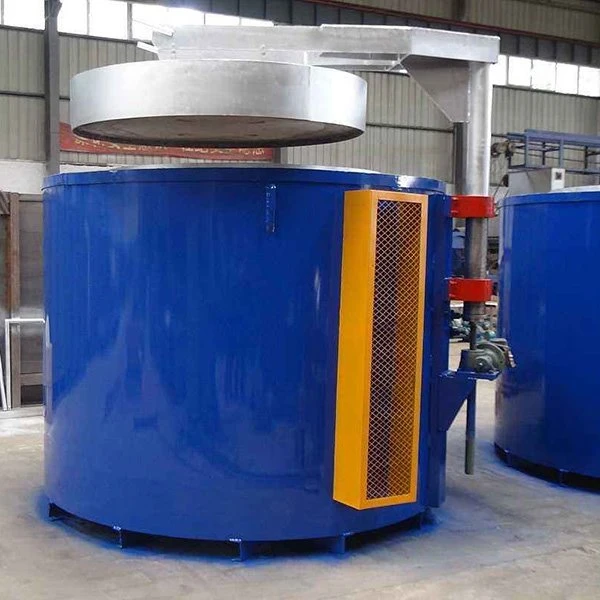
Tempering Resistance Furnace
You use this after quenching – it's not optional for most steels. Quenching makes parts hard but brittle. This tempering resistance furnace puts some toughness back in. Electric resistance heating brings the parts up to a temperature below the lower critical point – typically somewhere between 150°C and 650°C, depending on what you need. You want to cut the brittleness and get rid of internal stress while keeping most of the hardness you worked for.
Danyang Dingfeng Industrial Furnace Co., Ltd. is one of the most reliable manufacturers and suppliers of tempering resistance furnace in China. If you're going to wholesale durable tempering resistance furnace made in China, welcome to get pricelist from our factory. All customized products are with high quality and low price.
Product Definition
You use this after quenching – it's not optional for most steels. Quenching makes parts hard but brittle. This tempering resistance furnace puts some toughness back in. Electric resistance heating brings the parts up to a temperature below the lower critical point – typically somewhere between 150°C and 650°C, depending on what you need. You want to cut the brittleness and get rid of internal stress while keeping most of the hardness you worked for.
Working Principle
The elements inside the chamber do the heating. You take your quenched parts, put them in, and bring them up to your tempering temperature. Hold them there for a set time – long enough for the structure to stabilize – then cool them. Natural cool or controlled, doesn't matter much for most steels.
The control system automates the whole thing. Temperature stays where you set it. No guessing.

Features
Even heat
Good element layout means consistent temperature across the whole load. If one corner of the tempering resistance furnace runs cold, some parts will be under-tempered. I've seen that happen with cheap furnaces.
Precise control
PID controllers hold the temperature steady. No overshoot, no drift. That matters because tempering is sensitive – 10°C too high and you lose hardness. 10°C too low and the part stays brittle.
Saves power
Good insulation keeps the heat in. Electric is efficient anyway, but with fiber lining you lose less to the walls. A customer told me his fiber lined tempering furnace cut his power use by about 20% compared to his old brick unit.
Clean
No smoke, no burners, no exhaust. If your shop is in a neighborhood or you care about air quality, electric is the way to go.
Wide range
Low tempering around 150°C for some tool steels, high tempering up to 650°C for hot work steels. One tempering resistance furnace can do it all if you spec it right.
Easy to run
Load it, set the program, hit start. The control panel is straightforward. Your guys don't need a degree to operate it.
Applications
Automotive
Gears, crankshafts, axles, springs. You need strength and fatigue resistance together. Tempering gives you that.
Tool and die
Cutters, molds, punches. Too hard and they crack. Too soft and they wear out. Tempering finds the middle ground.
Bearings and fasteners
Bearing rings, high strength bolts. Need stable structure and consistent properties.
Machinery and equipment
Shafts, rollers, heavy structural parts after quenching. Tempering takes the brittle edge off.
Aerospace
Landing gear, engine parts. Precision tempering – tight tolerances, full documentation.
Hardware production
Knives, hand tools. Mass tempering. A kitchen knife maker I know runs their blades at 350°C for two hours. Comes out with good edge retention but not brittle.
Hot Tags: tempering resistance furnace, China tempering resistance furnace suppliers, factory



Send Inquiry
