

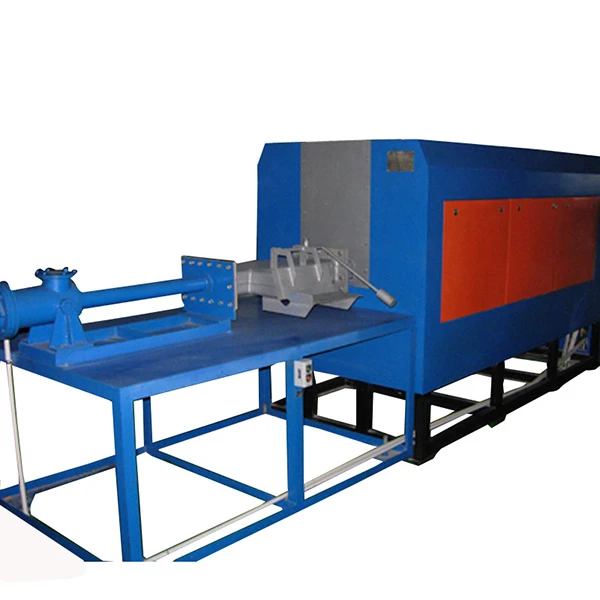

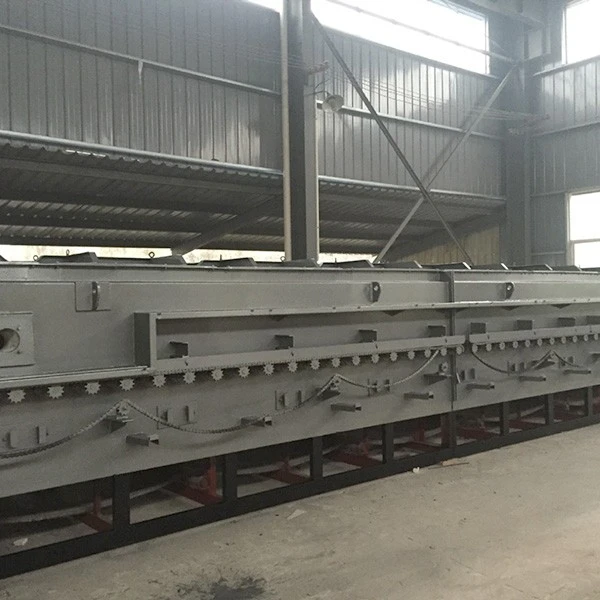
Push Rod Resistance Furnace
Push rod resistance furnace. Continuous furnace – not batch. Looks like a tunnel. There's a track on the hearth. You load your parts into trays or baskets, and a mechanical push rod shoves them in one at a time. They move through preheating, heating, soaking, and cooling zones, then come out the other end. We sell these to people running high volume production lines.
Danyang Dingfeng Industrial Furnace Co., Ltd. is one of the most reliable manufacturers and suppliers of push rod resistance furnace in China. If you're going to wholesale durable push rod resistance furnace made in China, welcome to get pricelist from our factory. All customized products are with high quality and low price.
Product Definition
Push rod resistance furnace. Continuous furnace – not batch. Looks like a tunnel. There's a track on the hearth. You load your parts into trays or baskets, and a mechanical push rod shoves them in one at a time. They move through preheating, heating, soaking, and cooling zones, then come out the other end. We sell these to people running high volume production lines.

Working Principle
First, you put your workpieces into refractory trays. A hydraulic or mechanical pusher advances the whole line of trays by one pitch – that's the length of one tray. The trays travel through the long furnace tunnel, passing through different heating zones. Each zone has its own temperature setting. Electric resistance elements – alloy wires or silicon carbide rods – do the heating.
After the thermal cycle, the trays exit the furnace. Usually they go onto a cooling conveyor or into a quenching tank. First tray in, first tray out. Every part gets the same treatment.

Features
- The push rod structure runs automatically. One operator can watch several furnaces. We've got a customer running three push rod furnaces with one guy loading and unloading.
- Each zone has its own temperature control. You can ramp up in zone one, soak in zone two, start cooling in zone three. Whatever your process needs.
- Heating elements are spaced along the furnace. Temperature stays steady from the entrance to the exit.
- Continuous feeding means no downtime between loads. The push rod resistance furnace doesn't cool down and heat up again.
- Insulation is fiber or brick. Heat loss stays low. Your gas or electric bill doesn't blow up.
- You can hook it up to a handling system. Trays come in, parts go out, nobody touches them.
Product Structure
A push rod resistance furnace typically includes these parts:
- Furnace body
- Multi-zone heating chamber
- Resistance heating elements
- Push rod transmission system
- Workpiece trays (or boats)
- Insulation lining
- Temperature control system
- Thermocouples
- Electrical control cabinet
- Cooling or discharge section
- Loading and unloading mechanisms (optional)
Applications
Automotive components
Gears, bearings, pins, bushings, fasteners. A transmission plant I know runs 40,000 parts per day through one of these.
Standard parts
Screws, bolts, nuts, rivets. Annealing, carburizing, tempering. A fastener maker in Ohio processes 30 tons of bolts a week on a single push rod line.
Bearing industry
Bearing rings and rollers. Spheroidizing and tempering. They need consistent structure or the bearings fail.
Hardware and tools
Hand tools, cutters, metal hardware.
Powder metallurgy
Sintering metal powder parts under controlled atmosphere.
Electronics
Annealing electronic and precision metal components.
Hot Tags: push rod resistance furnace, China push rod resistance furnace suppliers, factory, Annealing Resistance Furnace, Box Type Resistance Furnace, electric furnace, Push Rod Resistance Furnace, resistance furnace, Well type Resistance Furnace



Send Inquiry
