Temperature Control System Of Electric Resistance Furnace
Apr 13, 2026
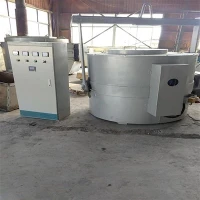
The temperature control system of an electric resistance furnace is the core component ensuring the stability of the heating process. It mainly consists of temperature sensors, a temperature controller, and an execution control unit. Temperature sensors, typically thermocouples or resistance temperature detectors (RTDs), are used to detect real-time temperature changes inside the furnace and transmit the signals to the control system, providing a basis for subsequent adjustments.
The temperature controller is the "central hub" of the system, responsible for processing the collected temperature signals and comparing them with the set temperature. Common temperature control methods include PID control algorithms, which automatically adjust the heating power based on temperature differences to maintain a stable furnace temperature, reduce fluctuations, and thus improve heating accuracy and process consistency.
The execution control unit is responsible for specific power regulation and is typically composed of solid-state relays, contactors, or thyristor power regulators. When the temperature falls below the set value, the system automatically increases the heating power; when the set temperature is reached, it reduces or cuts off the heating output. Through this closed-loop control method, the electric resistance furnace can achieve precise, stable, and safe temperature control.