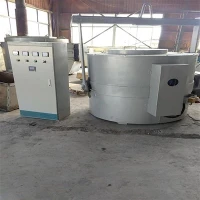
Working Principle Of Electric Resistance Furnace
Apr 14, 2026
The working principle of a resistance furnace is based on the Joule effect, where electric current passing through resistive elements generates heat. When the power is switched on, current flows through heating elements such as resistance wires, silicon carbide rods, or silicon molybdenum rods, converting electrical energy into heat energy. This rapidly heats the heating elements and releases heat into the furnace chamber.
The generated heat spreads within the furnace through radiation, convection, and conduction, gradually bringing the heated workpiece or medium to the desired temperature. The furnace chamber is typically constructed with refractory materials and insulation to minimize heat loss, improve overall thermal efficiency, and ensure a uniform temperature distribution within the furnace.
During operation, the temperature control system continuously monitors the furnace temperature and automatically adjusts the heating power according to the set value. When the temperature falls below the set value, the power supply is increased; when the target temperature is reached, the current is reduced or cut off, thus forming a closed-loop control system that enables the resistance furnace to achieve a stable, precise, and controllable heating process.