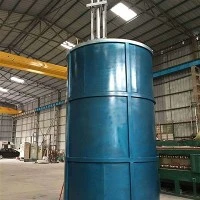
Production Process Of Electric Resistance Furnace
Apr 12, 2026
The production of resistance furnaces begins with structural design and material selection. The overall design is based on the operating temperature, furnace structure, and application scenario, determining the furnace chamber dimensions, heating method, and control system configuration. Subsequently, the furnace body steel structure is manufactured, typically using high-quality steel welded together to ensure sufficient strength and stability for subsequent assembly. In the manufacturing of key components, the processing of heating elements and furnace chamber materials is particularly crucial. Heating elements need to be precisely wound or shaped according to power requirements, ensuring consistent resistance values for stable heating. The furnace chamber is constructed using refractory bricks or ceramic fibers, or modularly installed, while incorporating a high-efficiency insulation layer to reduce heat loss and improve thermal efficiency.
Finally, the entire unit is assembled and debugged. The heating system, control system, and furnace structure are integrated, and temperature controllers, thermocouples, and safety protection devices are installed. After assembly, a power-on trial run and temperature calibration are performed to test the heating curve, temperature uniformity, and safety performance. Only after ensuring all indicators meet requirements can the equipment be put into formal use. This process directly determines the stability and service life of the resistance furnace.