

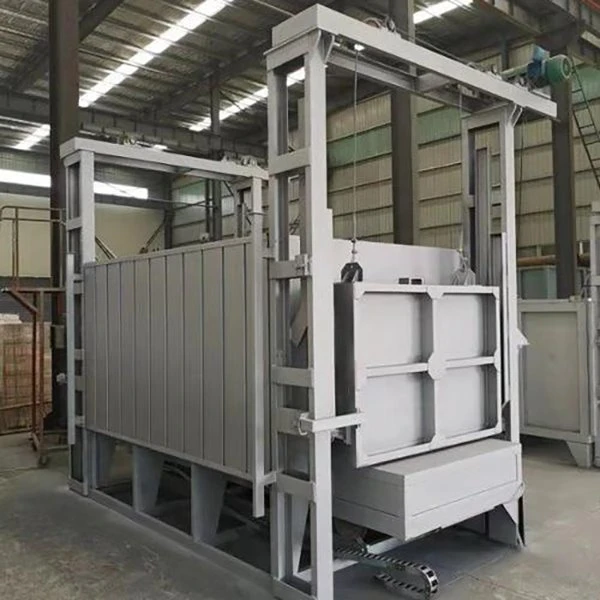
Electric Door Trolley Furnace
This Electric Door Trolley Furnace – it's a furnace with an electric hoist door. Pretty straightforward. You got a wire rope hoist, lifts the door straight up, lets it back down. Nothing fancy. I've been selling these for maybe fifteen years now. The reason people buy them? They work, they don't cost an arm and a leg, and your maintenance guy can actually fix it without calling me at 2 AM.
Danyang Dingfeng Industrial Furnace Co., Ltd. is one of the most reliable manufacturers and suppliers of electric door trolley furnace in China. If you're going to wholesale durable electric door trolley furnace made in China, welcome to get pricelist from our factory. All customized products are with high quality and low price.
Product Definition
This Electric Door Trolley Furnace – it's a furnace with an electric hoist door. Pretty straightforward. You got a wire rope hoist, lifts the door straight up, lets it back down. Nothing fancy. I've been selling these for maybe fifteen years now. The reason people buy them? They work, they don't cost an arm and a leg, and your maintenance guy can actually fix it without calling me at 2 AM.
Working Principle
Let me walk you through it. This is how the thing runs.
First. You put your workpieces on the trolley. Do that outside the furnace. Use a crane, use a forklift, whatever you got.
Second. The electric hoist kicks in. Lifts the door. On a typical door – say two meters wide, two meters tall, weighs maybe eight hundred kilos – a one and a half kilowatt hoist takes about ten seconds. Maybe twelve seconds if it's cold and the grease is thick.
Third. You roll the trolley into the chamber. Rails. Motor drive. Travel speed maybe two to three meters per minute. Not fast. You don't want fast.
Fourth. Lower the door. The hoist has limit switches – top and bottom. Stops itself.
Fifth. Fire up the heat. Elements or burners, depends what you ordered.
Sixth. Controller runs your curve. PID. We set it up during commissioning.
Seventh. Cycle finishes. Door lifts. Trolley rolls out. Unload.
That's the whole thing. No hydraulics. No complex linkages. Just a hoist, some wire rope, and a door that goes up and down.

Features
- Simple and reliable. That's the main thing. You can buy a replacement hoist from any lifting equipment supplier. I mean any. Hydraulic systems? Good luck finding a cylinder seal kit on a Sunday. With a hoist, the hardest part is the limit switch, and even that's just a standard part you get from an electrical supply house.
- Cost effective. I'll give you numbers. For a five meter by two and a half meter by two meter furnace – door about six hundred kilos – the hoist system adds maybe eight to ten percent to the total price. Hydraulic lift with pump, tank, cylinder, valves? Closer to twenty to twenty five percent. I've had customers pick the hoist just because their guys already know how to work on overhead cranes. That matters.
- Smooth operation. Well, smooth enough. A two speed hoist helps. Slow approach at the bottom so you don't slam the door into the seal. Single speed hoists can be jerky. I remember one customer complained about vibration – they were doing some precision alloy work, very sensitive. We put a soft start VFD on the hoist. Fixed it. Cost extra but they were happy.
- Effective sealing. Sand seals work fine. The weight of the door plus maybe a hundred to a hundred fifty kilos of extra preload compresses the seal. One of my customers runs a nine hundred fifty degree carburizing furnace with a hoist door and fiber soft seals. We measured the leak rate – less than five pascals per second. That's good enough for most atmospheres. Not all, but most.
- Safety interlocks. This is important. We wire the hoist control and the trolley drive together. The trolley will not move unless the door is at the top limit. Simple relay logic. No PLC needed. I've walked into shops where someone bypassed that interlock with a piece of jumper wire. I told them straight – don't do that. The door will come down on someone's head. That's not a joke.
Applications
General heat treatment
Annealing, normalizing, quenching, tempering. The usual stuff. One customer uses a Electric Door Trolley Furnace for three ton gear blanks. They load them hot from the forging press, straight into the furnace for preheat. The hoist opens and closes maybe fifteen times per shift. Three years, no problems. That customer calls me once a year for spare seals. That's it.
Heavy machinery
Factories making large castings and forgings. A mining equipment builder runs a hoist door furnace for twenty five ton excavator boom sections. The door is three meters wide, two meters tall. We had to reinforce it with internal ribs because the back face gets radiant heat. Without ribs, the door skin warps after a year. We learned that the hard way – first one we built for them warped. Replaced it under warranty. Now we put ribs in standard.
Wind power and energy
Wind turbine hubs and main shafts. We built a hoist door furnace for a customer in Texas – chamber seven meters by four meters by three meters. Door weight one point six tons. That's heavy. A standard two ton hoist was marginal. We ended up using two synchronized hoists with a common control. Works fine but you have to adjust the wire ropes every few months. I warned them about that upfront. They said okay.
Customization Capabilities
Dingfeng Industrial Furnace
We change things based on what you need. I don't like the word "customization capabilities" – sounds like a brochure. We just build what you ask for.
Lifting power
Hoist rating should be about one and a half times the door weight. That's my rule. Five hundred kilo door? Use a seven hundred fifty kilo or one ton hoist. One and a half ton door? A two ton hoist is borderline – I go to three tons. Because the door binds sometimes if the rails aren't perfectly aligned. And rails are never perfectly aligned. Not after the first year.
Sealing options
Standard sand seal works for most. But if you need something tighter, we add pneumatic compression – air cylinders push the door against the seal after it's lowered. I had a customer with a hydrogen atmosphere furnace – they needed it tight. We did a helium leak test. One times ten to the minus six millibar liter per second. That's pretty tight.
Observation ports
Peepholes in the door. Quartz glass, fifty millimeter diameter, with a manual shutter. One foundry customer uses them to check if their molds have cracked during heating. Saves them from opening the door and losing two hundred degrees. Smart.
Cooling jackets
For furnaces running above a thousand degrees, the door face gets a lot of radiation. We can add a water cooled jacket – six millimeter plate with internal baffles, fifteen liters per minute flow rate. Keeps the door frame below eighty degrees. Without cooling, the door seals cook and the wire rope gets brittle. I've seen wire ropes snap from heat damage. Not pretty.
Hot Tags: electric door trolley furnace, China electric door trolley furnace suppliers, factory, Car Bottom Annealing Furnace, car bottom forging furnace, Car Bottom Quenching Furnace, Industrial Aluminum Melting Furnace, Trolley Forging Furnace, Trolley Type Tempering Furnace


Send Inquiry
