

What are the differences between a natural - draft and a forced - draft tempering furnace?
Aug 24, 2026
When it comes to tempering furnaces, two common types of draft systems are often discussed: natural - draft and forced - draft. As a tempering furnace supplier, I've had the opportunity to work with both types extensively and understand their unique characteristics. In this blog, I'll delve into the differences between natural - draft and forced - draft tempering furnaces, exploring their working principles, advantages, disadvantages, and applications.
Working Principles
Natural - Draft Tempering Furnaces
Natural - draft tempering furnaces rely on the natural movement of air based on the principle of buoyancy. Hot air rises, creating a pressure difference within the furnace. As the air inside the furnace heats up, it becomes less dense and ascends, drawing in cooler air from the outside through intake vents. This continuous cycle of hot air rising and cool air entering maintains the flow of air within the furnace. The movement of air is passive, driven solely by the temperature difference between the inside and outside of the furnace.

Forced - Draft Tempering Furnaces
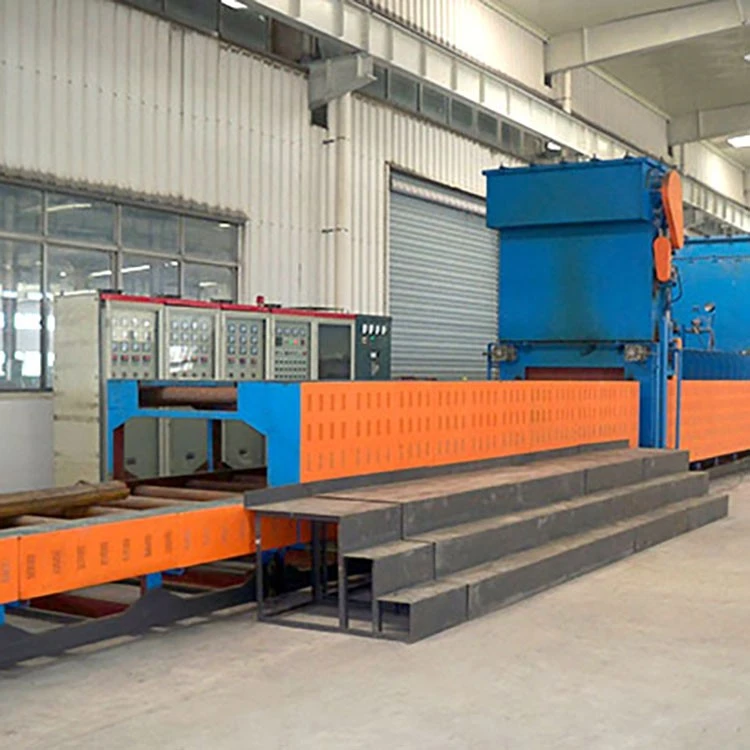
In contrast, forced - draft tempering furnaces use mechanical devices such as blowers or fans to actively move air through the furnace. These fans force air into the furnace, creating a positive pressure environment. The forced air can be directed precisely to specific areas of the furnace, ensuring even distribution of heat. The speed and volume of the air can be controlled, allowing for more precise regulation of the heating process.
Advantages
Natural - Draft Tempering Furnaces
- Simplicity: One of the major advantages of natural - draft furnaces is their simplicity. They have fewer moving parts compared to forced - draft furnaces, which means less maintenance and lower chances of mechanical failure. This simplicity also makes them more cost - effective to purchase and operate in the long run.
- Energy Efficiency: Since they rely on natural air movement, natural - draft furnaces consume less energy. There is no need to power a blower or fan continuously, reducing electricity costs. This makes them an attractive option for applications where energy conservation is a priority.
- Low Noise: Natural - draft furnaces operate quietly as there are no noisy fans or blowers. This can be beneficial in environments where noise pollution is a concern, such as in small workshops or research facilities.
Forced - Draft Tempering Furnaces
- Precise Temperature Control: The ability to control the air flow precisely allows forced - draft furnaces to achieve more accurate temperature control. The forced air can be adjusted to maintain a uniform temperature throughout the furnace, ensuring consistent tempering results. This is crucial for applications where tight temperature tolerances are required, such as in the aerospace or automotive industries.
- Faster Heating and Cooling: The forced air circulation in these furnaces speeds up the heating and cooling processes. This reduces the overall processing time, increasing productivity. For high - volume production facilities, this can lead to significant cost savings and improved efficiency.
- Better Heat Distribution: Forced - draft furnaces can ensure that heat is evenly distributed throughout the furnace chamber. This is especially important when tempering large or irregularly shaped workpieces. The consistent heat distribution helps to prevent hot spots and cold spots, resulting in better - quality tempered products.
Disadvantages
Natural - Draft Tempering Furnaces
- Limited Airflow: The natural air movement in these furnaces is relatively slow and limited. This can result in uneven heat distribution, especially in larger furnaces or when tempering complex workpieces. The slow airflow may also lead to longer heating and cooling times, reducing productivity.
- Sensitivity to External Conditions: Natural - draft furnaces are highly sensitive to external factors such as wind, temperature, and barometric pressure. Changes in these conditions can affect the air flow within the furnace, leading to inconsistent tempering results. This makes them less reliable in environments with variable weather conditions.
- Inability to Handle High - Volume Production: Due to their limited airflow and slower processing times, natural - draft furnaces are not suitable for high - volume production. They are better suited for small - scale operations or applications where precision is not as critical.
Forced - Draft Tempering Furnaces
- Higher Initial Cost: The addition of blowers or fans increases the initial cost of forced - draft furnaces. The mechanical components also require more complex installation and setup, which can add to the overall cost.
- Increased Maintenance: With more moving parts, forced - draft furnaces require more frequent maintenance. The fans and blowers need to be regularly inspected, lubricated, and replaced if necessary. This can increase the operating costs over time.
- Noise Pollution: The operation of fans and blowers in forced - draft furnaces generates noise. In some environments, this noise can be a nuisance and may require additional noise - reduction measures.
Applications
Natural - Draft Tempering Furnaces
- Small - Scale Workshops: Natural - draft furnaces are well - suited for small - scale workshops where cost - effectiveness and simplicity are important. They can be used for tempering small batches of tools, jewelry, or other small metal parts.
- Research and Development: In research facilities, natural - draft furnaces can be used for experimental tempering processes. Their simplicity and low energy consumption make them ideal for testing new materials and processes without the need for complex equipment.
- Artisanal Metalworking: For artisans and craftsmen, natural - draft furnaces offer a cost - effective and quiet solution for tempering metal objects. They can be used to create unique and high - quality metal products.
Forced - Draft Tempering Furnaces
- Automotive and Aerospace Industries: These industries require precise tempering of large and complex components. Forced - draft furnaces can provide the accurate temperature control and uniform heat distribution needed to meet the strict quality standards of these industries.
- High - Volume Manufacturing: For mass - production facilities, forced - draft furnaces are essential. Their ability to heat and cool quickly and evenly allows for efficient production of large quantities of tempered products.
- Heat - Treating Service Providers: Heat - treating service providers often deal with a wide variety of workpieces and customer requirements. Forced - draft furnaces offer the flexibility and precision needed to handle different types of tempering jobs.
Our Product Range
As a tempering furnace supplier, we offer a wide range of tempering furnaces to meet different customer needs. Whether you are looking for a natural - draft or forced - draft furnace, we have the right solution for you. Our product range includes:
- Full Fiber Tempering Furnace: This furnace features high - quality fiber insulation, providing excellent energy efficiency and temperature stability.
- Roller Bottom Tempering Furnace: Ideal for continuous production, this furnace uses a roller bottom to transport workpieces through the heating chamber, ensuring smooth and efficient operation.
- Push Rod Tempering Furnace: This furnace is suitable for batch production. The push rod mechanism allows for easy loading and unloading of workpieces, improving productivity.
- Pit Type Tempering Furnace: Designed for large - scale workpieces, this pit - type furnace provides a large heating chamber and excellent heat distribution.
- Mesh Belt Tempering Furnace: This furnace uses a mesh belt to convey workpieces, making it suitable for high - volume production of small to medium - sized parts.
Contact Us for Purchase and Negotiation
If you are interested in purchasing a tempering furnace or need more information about our products, we encourage you to contact us. Our team of experts is ready to assist you in selecting the right furnace for your specific requirements. We can also provide detailed technical specifications, pricing, and after - sales support. Let's start a conversation and find the perfect tempering furnace solution for your business.
References
- ASM Handbook Volume 4: Heat Treating. ASM International.
- Heat Treating Furnaces: Principles, Design, and Operation. Industrial Heating Equipment Association.