

What are the abrasion - resistance properties of High Temperature Fiber?
Oct 16, 2026
As a supplier of high temperature fiber, I've witnessed firsthand the growing demand for materials that can withstand extreme conditions. High temperature fiber has emerged as a crucial solution in various industries, from aerospace to manufacturing. One of the most important characteristics of high temperature fiber is its abrasion - resistance properties, which play a significant role in determining its performance and longevity.
Understanding Abrasion Resistance in High Temperature Fiber
Abrasion resistance refers to a material's ability to withstand the wearing effect caused by friction when it comes into contact with another surface. In the context of high temperature fiber, this is especially important because these fibers often operate in harsh environments where they are exposed to constant rubbing, scraping, or impact.
The abrasion - resistance properties of high temperature fiber are influenced by several factors. Firstly, the chemical composition of the fiber plays a vital role. Different fibers are made from different materials, such as ceramic, carbon, or glass. Each of these materials has unique atomic structures and bonding characteristics that affect their resistance to abrasion. For example, ceramic fibers are known for their high hardness and strong atomic bonds, which make them relatively more resistant to abrasion compared to some other types of fibers.
Secondly, the physical structure of the fiber also matters. Fibers with a smooth surface and a uniform diameter are generally more abrasion - resistant. A rough or irregular surface can increase the likelihood of snagging and wear, while a non - uniform diameter can create stress concentrations that lead to premature failure. Additionally, the way the fibers are woven or formed into a fabric can impact their abrasion resistance. A tightly woven fabric will distribute the abrasion forces more evenly across the fibers, reducing the risk of damage.
Applications and the Need for Abrasion Resistance
High temperature fiber is used in a wide range of applications, and the need for abrasion resistance varies depending on the specific use case.
Aerospace Industry
In the aerospace industry, high temperature fibers are used in components such as aircraft engine insulation and heat shields. These components are exposed to high - speed airflow, which can cause significant abrasion over time. The abrasion - resistant properties of the fiber ensure that the insulation and heat shields maintain their integrity, protecting the surrounding structures from heat damage and ensuring the safe operation of the aircraft. For instance, carbon fibers are often used in aerospace applications due to their excellent combination of high temperature resistance and abrasion resistance.
Manufacturing and Industrial Furnaces
In manufacturing and industrial furnaces, high temperature fiber is used for insulation purposes. The fiber is often in contact with moving parts, such as conveyor belts or mechanical arms, which can cause abrasion. Moreover, the high - temperature environment can also accelerate the wear process. Using high - abrasion - resistant fiber helps to extend the lifespan of the insulation, reducing maintenance costs and downtime. For example, when lining a furnace, High Alumina Refractory Bricks are often used in combination with high temperature fiber. The fiber's abrasion resistance ensures that it can withstand the constant movement and friction within the furnace.
Automotive Industry
In the automotive industry, high temperature fiber is used in exhaust systems and engine components. The exhaust gases flowing through the system can cause abrasion on the fiber insulation, and the vibrations from the engine can also contribute to wear. Abrasion - resistant high temperature fiber helps to maintain the insulation performance, reducing heat transfer to the surrounding parts and improving the overall efficiency of the vehicle.
Testing the Abrasion - Resistance Properties
To ensure the quality and performance of high temperature fiber, various testing methods are used to evaluate its abrasion - resistance properties. One common method is the Taber abrasion test. In this test, a sample of the fiber fabric is mounted on a rotating platform, and a weighted abrasive wheel is applied to the surface of the fabric. The number of rotations required to cause a certain level of damage, such as a visible hole or a significant loss of mass, is recorded. This provides a quantitative measure of the fabric's abrasion resistance.
Another method is the Martindale abrasion test. In this test, the fiber sample is rubbed against a standard abrasive fabric in a multi - directional motion. The test is continued until a specified level of wear is achieved, and the results are used to compare the abrasion resistance of different fiber materials.
Enhancing Abrasion Resistance
There are several ways to enhance the abrasion - resistance properties of high temperature fiber. One approach is to modify the fiber's surface. This can be done through chemical treatments or coatings. For example, applying a thin layer of a hard - wearing ceramic coating to the fiber surface can significantly improve its abrasion resistance. The coating acts as a barrier, protecting the underlying fiber from direct contact with the abrasive surface.
Another way is to optimize the fiber's manufacturing process. By controlling the spinning parameters, such as the temperature and speed, the physical structure of the fiber can be improved. This can result in a smoother surface and a more uniform diameter, which in turn enhances the fiber's abrasion resistance.
Related Products and Their Compatibility
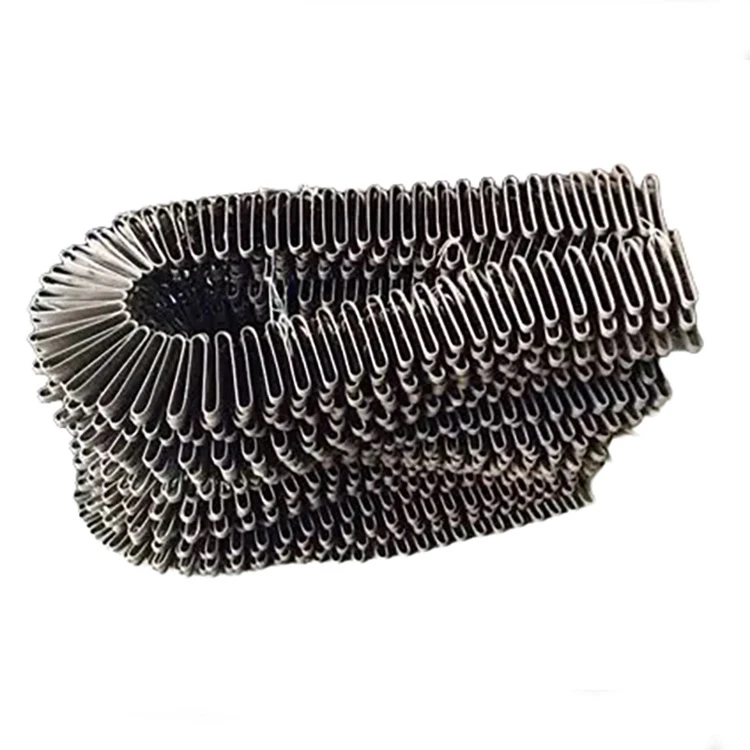
In addition to high temperature fiber, there are several other products that are often used in conjunction with it in high - temperature applications. Resistance Heating Strip, for example, is commonly used in industrial furnaces to provide heat. The high temperature fiber can be used to insulate the heating strip, protecting it from external abrasion and improving its energy efficiency.
Long Shaft Lifting Hanger is another important accessory in furnace operations. When using high temperature fiber for furnace lining, the lifting hanger needs to be able to move through the fiber without causing excessive abrasion. The abrasion - resistant properties of the fiber ensure that it can withstand the movement of the hanger without being damaged.
High Alumina Brick is often used in the construction of furnace walls. The high temperature fiber can be used to fill the gaps between the bricks, providing additional insulation and abrasion resistance.
The Tempering Furnace Fan is also an important component in high - temperature processes. The high temperature fiber can be used to insulate the fan, protecting it from the high - temperature environment and reducing the risk of abrasion caused by the moving air.
The Significance of Abrasion Resistance for Our Customers
For our customers, the abrasion - resistance properties of high temperature fiber are of utmost importance. In industries where downtime and maintenance costs are high, using a fiber with excellent abrasion resistance can lead to significant savings. It reduces the frequency of fiber replacement, extends the lifespan of equipment, and ensures the continuous and efficient operation of various processes.
Moreover, the high - quality abrasion - resistant high temperature fiber we provide also meets the strict safety and performance requirements of different industries. Whether it's in aerospace, manufacturing, or automotive applications, our fiber can withstand the harsh conditions and provide reliable protection.
Contact Us for Procurement and Consultation
If you are looking for high quality high temperature fiber with excellent abrasion - resistance properties, we are the ideal partner for you. Our years of experience in the industry have enabled us to develop and supply top - notch fiber products that meet the diverse needs of our customers. Whether you need a large - scale supply for a major industrial project or a custom - made solution for a specific application, we are here to assist you.
Feel free to reach out to us for procurement and to start a discussion about how our high temperature fiber can be the perfect fit for your requirements. Our team of experts is ready to provide you with detailed information, answer your questions, and guide you through the selection process.
References
- "High - Temperature Fibers: Properties, Development, and Applications" by X. Zhang
- "Abrasion Resistance Testing of Advanced Materials" by J. Smith
- "Industrial Furnace Design and Operation" by R. Brown