

What is the expansion coefficient of High Alumina Brick?
Aug 11, 2026
As a supplier of High Alumina Bricks, I've encountered numerous inquiries regarding their expansion coefficient. This is a crucial property that significantly impacts the performance and application of these bricks in various high - temperature environments.
Understanding the Expansion Coefficient
The expansion coefficient of a material, in this case, High Alumina Bricks, refers to the degree of dimensional change when the material is subjected to a change in temperature. It is typically expressed as the fractional change in length or volume per unit change in temperature. For High Alumina Bricks, we commonly use the linear expansion coefficient (α), which is defined as the change in length (ΔL) per unit original length (L₀) per degree change in temperature (ΔT). The formula is α = (ΔL / L₀) / ΔT.
The expansion coefficient of High Alumina Bricks is not a fixed value. It varies depending on several factors, including the alumina content, the manufacturing process, and the presence of other additives or impurities. Generally, High Alumina Bricks with higher alumina content tend to have a lower expansion coefficient. Alumina (Al₂O₃) has relatively stable thermal properties, and as its proportion in the brick increases, the brick becomes more resistant to thermal expansion.
Factors Affecting the Expansion Coefficient
Alumina Content
Alumina is a key component in High Alumina Bricks. The higher the percentage of alumina, the more closely the thermal behavior of the brick resembles that of pure alumina. For example, bricks with an alumina content of 70% - 80% will have a different expansion coefficient compared to those with 40% - 50% alumina. The former will typically expand less with temperature increases, which is beneficial in applications where tight tolerances and dimensional stability are required.
Manufacturing Process
The way High Alumina Bricks are manufactured also plays a significant role. Processes such as sintering temperature and time can affect the crystal structure and density of the bricks. Higher sintering temperatures can lead to a more compact and stable structure, which in turn can result in a lower expansion coefficient. For instance, bricks that are sintered at extremely high temperatures for an extended period may have a more uniform and fine - grained structure, offering better thermal stability.
Presence of Additives and Impurities
Additives are sometimes incorporated into High Alumina Bricks to enhance certain properties. However, these additives can also influence the expansion coefficient. Some additives may react with the alumina or other components in the brick at high temperatures, causing changes in the molecular structure and, consequently, the expansion behavior. Similarly, impurities, such as iron oxides or silica, can have an impact on the expansion characteristics. Even small amounts of impurities can act as catalysts or modifiers during thermal cycling, altering the way the brick expands and contracts.
Importance of the Expansion Coefficient in Applications
The expansion coefficient of High Alumina Bricks is of utmost importance in high - temperature applications. In industries such as metallurgy, glassmaking, and ceramics, these bricks are used to line furnaces and kilns. A mismatch in the expansion coefficient between the High Alumina Bricks and other components in the furnace can lead to significant problems.
For example, if the expansion coefficient of the High Alumina Bricks is much higher than that of the surrounding structure, the bricks may expand more rapidly during heating. This can cause stress on the joints and adjacent materials, leading to cracking and potentially compromising the integrity of the lining. On the other hand, if the expansion coefficient is too low compared to the rest of the system, gaps may form between the bricks during heating, allowing hot gases to escape and reducing the energy efficiency of the furnace.
Measuring the Expansion Coefficient
To accurately determine the expansion coefficient of High Alumina Bricks, specialized testing equipment is used. One common method is dilatometry. In this technique, a small sample of the brick is heated at a controlled rate, and the change in length is measured using a highly sensitive transducer. The data collected is then used to calculate the linear expansion coefficient over a specific temperature range.
It's important to note that the expansion coefficient can vary with temperature. High Alumina Bricks may exhibit different expansion behaviors at low temperatures (e.g., room temperature to 500°C) compared to high temperatures (e.g., 1000°C - 1600°C). Therefore, it's necessary to measure the expansion coefficient at multiple temperature points to fully understand the thermal behavior of the bricks.
Related Products and Their Significance
In addition to High Alumina Bricks, there are several related products that are commonly used in high - temperature applications. These products often work in conjunction with High Alumina Bricks and can also have their own unique expansion characteristics.
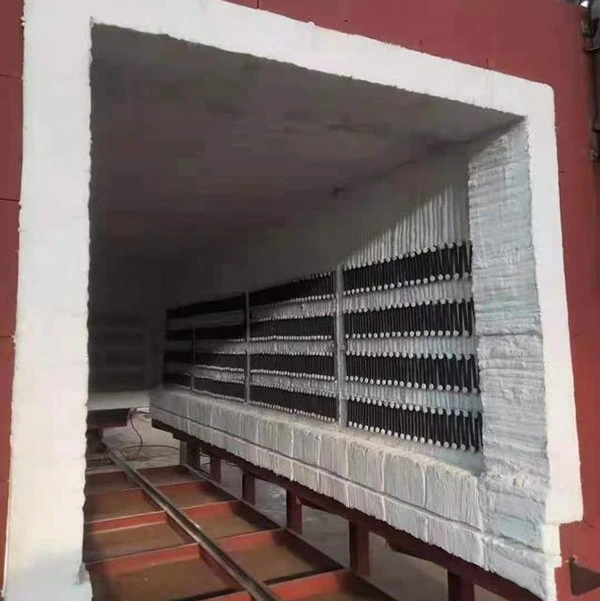
- Fiber Furnace Lining: The Fiber Furnace Lining is an essential component in many furnaces. It provides excellent insulation and can help reduce heat loss. The expansion coefficient of the fiber material needs to be compatible with that of the High Alumina Bricks to prevent any thermal stress issues.
- High Temperature Fiber: High Temperature Fiber is known for its ability to withstand extreme temperatures. It can be used as a filler or reinforcement material in combination with High Alumina Bricks. Understanding its expansion behavior is crucial for ensuring the overall performance of the furnace lining.
- Tempering Furnace Fan: The Tempering Furnace Fan plays a vital role in maintaining proper air circulation within the furnace. The materials used in the fan, including any ceramic or metal components, need to have compatible expansion coefficients with the High Alumina Bricks to prevent mechanical failures due to thermal expansion.
- High - Alumina Ceramic Tube: High - Alumina Ceramic Tube is often used in high - temperature applications for transporting gases or liquids. Its expansion coefficient should be considered when integrating it with High Alumina Bricks in a furnace system to avoid leakage or structural damage.
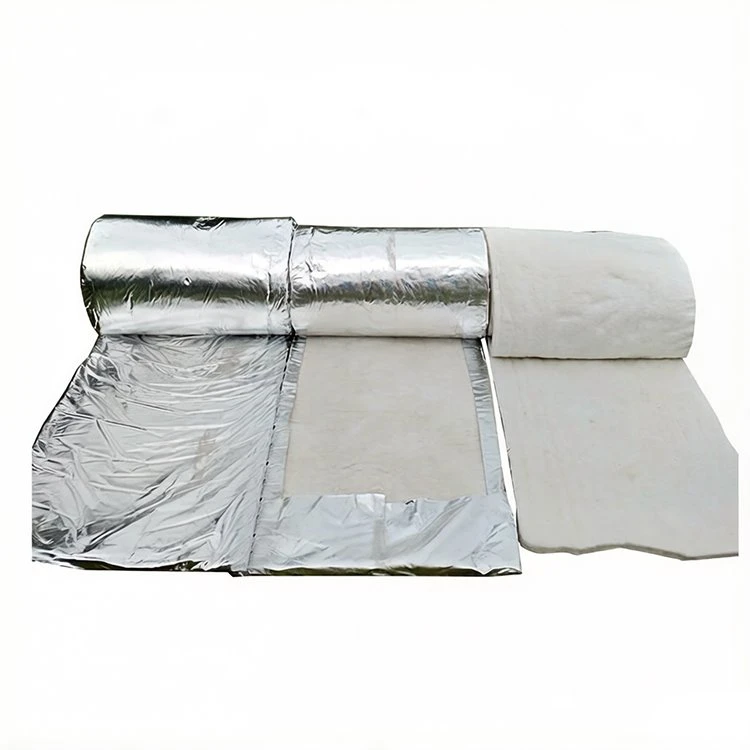
- Fiber Needled Insulation Blanket: The Fiber Needled Insulation Blanket provides additional insulation and protection. Similar to the other products, its expansion characteristics need to be in harmony with those of the High Alumina Bricks to ensure the longevity and efficiency of the furnace.
Contact for Procurement
If you're looking for high - quality High Alumina Bricks and want to learn more about their expansion coefficient and how they can meet your specific application requirements, I'm here to help. Our team of experts can provide detailed information and guidance on selecting the right products for your furnace or kiln. We can also offer technical support in understanding the interaction between High Alumina Bricks and other related products such as Fiber Furnace Lining, High Temperature Fiber, Tempering Furnace Fan, High - Alumina Ceramic Tube, and Fiber Needled Insulation Blanket.
References
- "High - Temperature Materials and Technology" by John Wiley & Sons
- "Ceramics and Glasses" handbook published by the American Ceramic Society
- Technical reports on High Alumina Bricks from industry research institutions